
March at CLOS CIEN.
The vines are waking up. And so, I think, am I.
January was pruning. February, the vine wept its first sap and I learned what it meant. I thought I was beginning to understand the rhythm of this place. Then March arrived and the vineyard changed so completely that I had to start paying attention all over again.
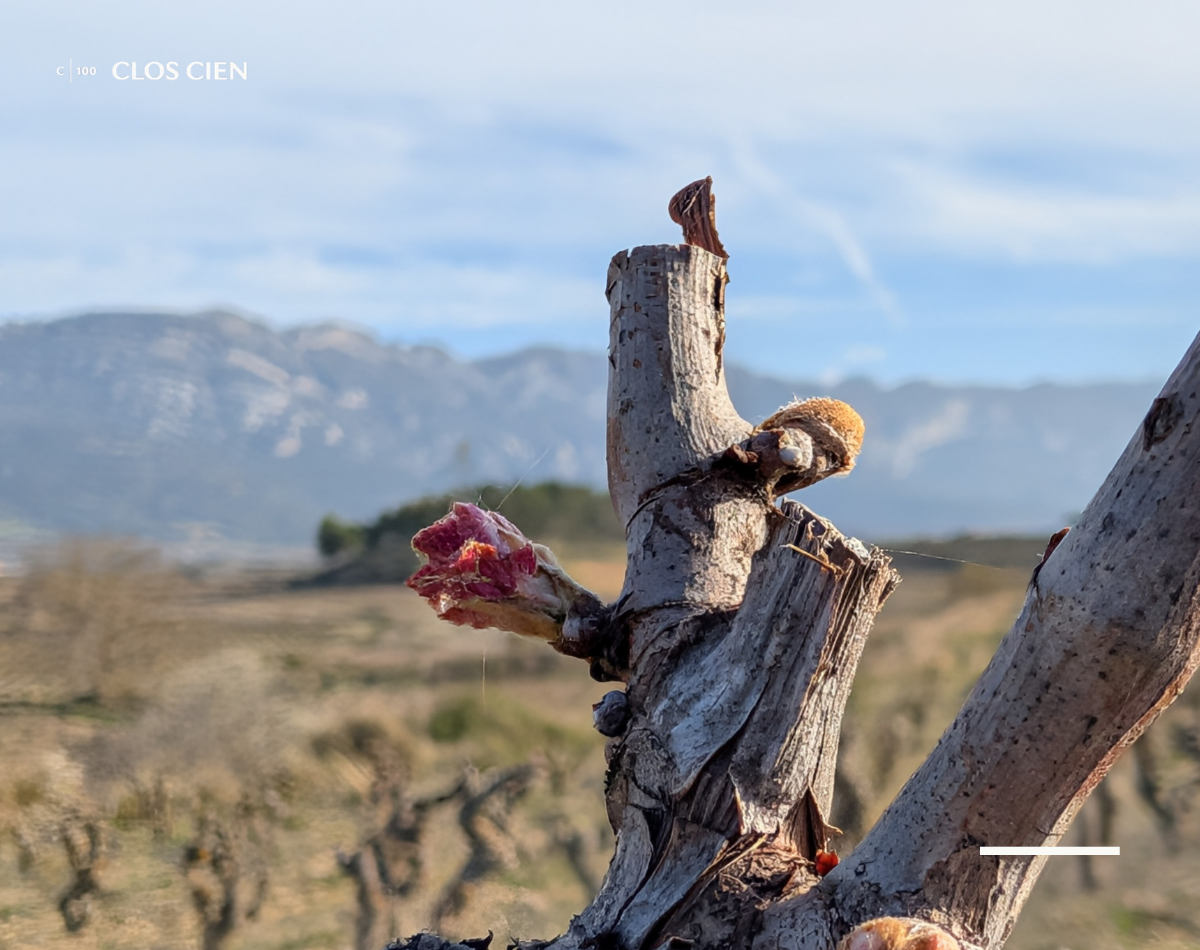
Desborre. Budburst. I had been warned to watch for it. What I was not prepared for was how it would actually feel to see it.
The Morning I Saw It
I was standing at the edge of one of the plots on a morning in mid-March, the kind of clear, cold morning where the Cantabrian Mountains are so sharp you feel like you could reach them. And there, at the tips of the pruning cuts, the first woolly green shoots were pushing out. Small. Almost furry. Unmistakably alive.
After months of bare brown wood and patience, those tiny green points felt enormous.
This is what all of February was building toward. The sap that wept from the cuts last month was the vine’s vascular system clearing itself, sending water and minerals upward. Now that pressure has done its work. When soil temperature tips above a certain point, the buds can no longer hold back. They swell, split their protective coating, and push out the first growth of the 2026 vintage.
The vine has survived winter. The growing season has begun. Your wine is on its way.
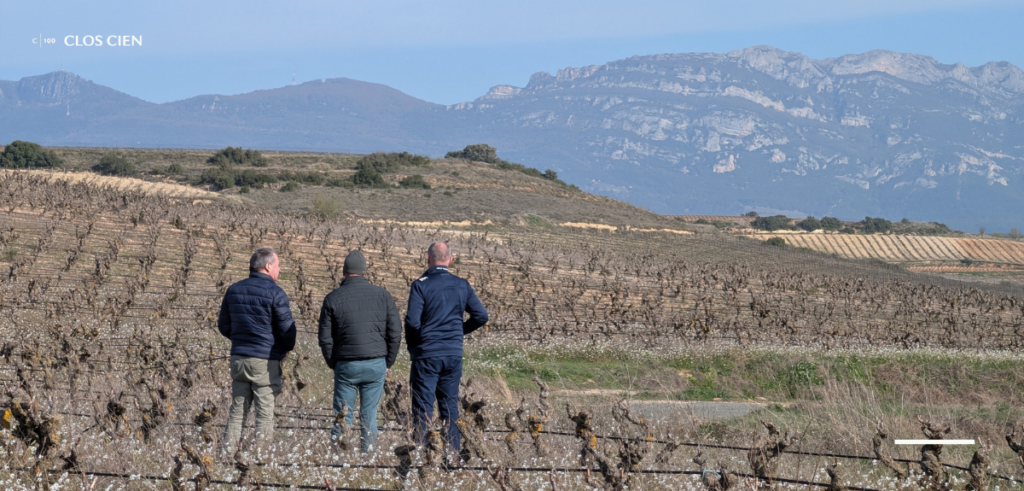
Image Source: CLOS CIEN
What I Did Not Know About a Bud
Here is something that changed how I think about these vines entirely. What looks like a single dormant bud on each shoot is actually three buds nested inside each other. Millions of years of evolution with one purpose: the vine survives no matter what.
The primary bud carries this year’s fruit clusters. It is the one everything is organised around. If a late frost kills it, the secondary bud pushes out, carrying roughly half the fruit. If that is lost too, the tertiary bud is the last resort, with almost no fruit but the vine lives.
I keep thinking about this. The vine has been planning for disaster since before humans existed. It is, in the most practical sense, built to last.
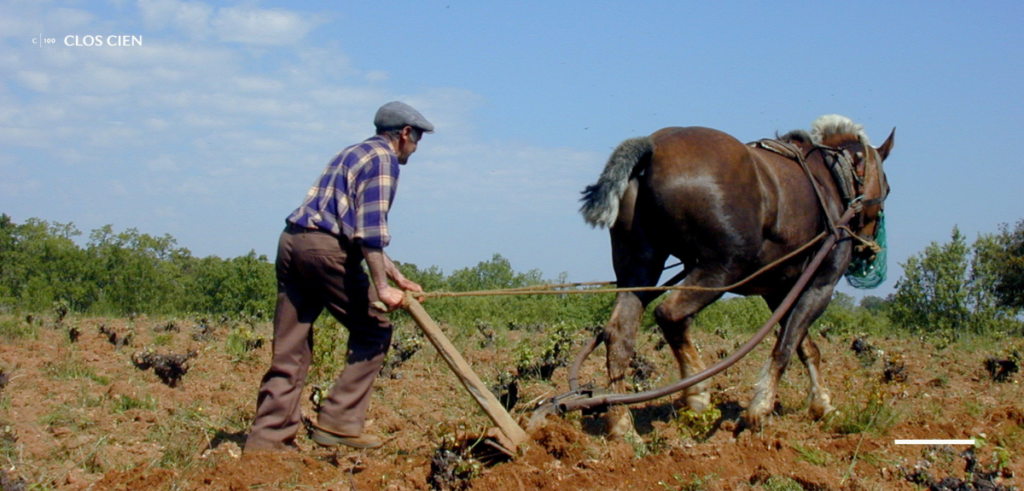
Image Source: CLOS CIEN
The First Work of Spring
While the buds were pushing green outside, the team was moving through the vineyard doing two things I had never heard of before.
La Labranza, the first ploughing of spring. A light pass through the cover crops and winter weeds between the vines, turning the green matter into the soil where it breaks down and releases nitrogen exactly when the vine needs it. But also, and this surprised me, sealing moisture in. Ploughing breaks the surface crust and stops the process that pulls water upward through the soil and evaporates it into the air. The winter rains get locked underground so the roots can reach them in July when the vineyard runs dry. I had never thought about soil as something that holds memory. It does.
Then Desnietado, suckering. New shoots appear at the base of the trunk, below the main head of the vine. They are called nietos in Spanish. Grandchildren. They sound charming. They are thieves. Every bit of sap they take is sap the fruit-bearing shoots do not get. In March, while they are still soft, they are snapped off by hand. Tedious, I was told. Essential.
In the Cellar: The Art of the Blend
While the vines were waking up outside, something equally important was happening inside the bodega.
March is the traditional month for El Ensamblaje, the blending. The 2024 harvest has been kept deliberately apart in separate barrels since it was made. Tempranillo from a sandy plot. Graciano from a clay-heavy hillside. Wine from older vines alongside wine from younger ones. Each developing its own character in the dark.
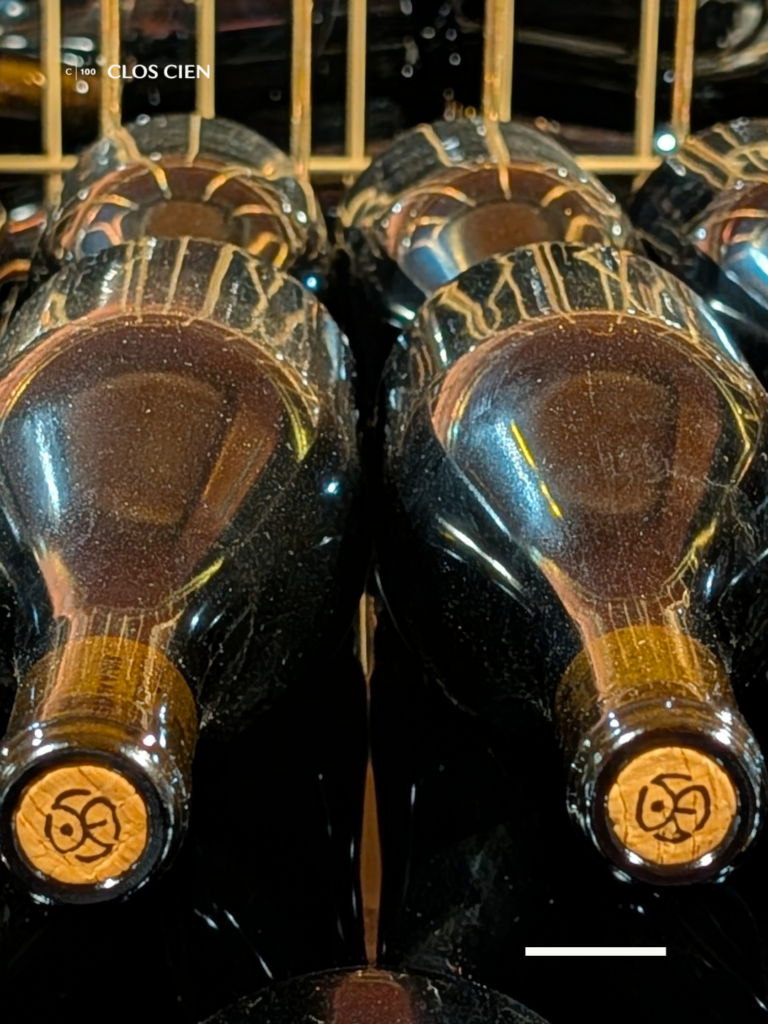
Now Jaione and the technical team sit down with all of it and decide how these separate voices come together to tell one story. I was told that blending sounds romantic. In practice it begins with a notebook, a pipette, and dozens of small glasses. Ninety parts this, ten parts that. Taste blind. Adjust. Repeat.
What eventually goes into the bottle is no longer a collection of parts. It is one thing.
What March Actually Is
I came into this thinking the exciting months would be harvest and budburst. They are. But I am learning that every month here is doing something that matters.
Those first green shoots are your 2026 vintage beginning. The blended wine resting in tank is your 2024 vintage finding its final shape. Both things are happening at the same time. The vineyard is always at multiple points in the story simultaneously.
Next month: the primera inflorescencia, the first tiny flower clusters, the earliest indication of where this year’s grapes will actually form. One of the most fragile moments of the growing season. I am already nervous about the frost.
Want to follow along as my first year at CLOS CIEN unfolds?
A vineyard membership would be a perfect present. I’m enjoying it so much. It’s so much more than a bottle of wine. You can find out how to get a vineyard as a present, and other ideas in the guide to gifts for wine lovers page.