Category: Wine Education

  • Old Vines and Rioja’s Viñedo Singular: The Real Definition

    Old Vines and Rioja’s Viñedo Singular: The Real Definition

    Old Vines, Old Debate… And Why Rioja Has Already Answered It

    A response from CLOS CIEN, Rioja Alavesa

    The conversation around old-vine wine has been simmering for years, and pieces like this one are doing important work in bringing it to a wider audience. The science is accumulating and the consumer curiosity is there. What has been missing, until relatively recently, is a regulatory framework with enough teeth to give “old vine” real meaning beyond the marketing department.

    In Rioja, that framework now exists. And it changes the terms of the debate considerably.

    How Rioja Made Old Vines Legally Meaningful

    In 2017, DOCa Rioja did exactly that, formally approving the Viñedo Singular designation and implementing it from 2019 onwards. It is worth understanding what that classification actually demands, because it goes considerably further than a minimum vine age.

    What Viñedo Singular Actually Demands

    RequirementStandard
    Minimum Vine Age35+ years
    Harvest MethodExclusively by hand
    Yield LimitMax 5,000 kg/ha (Red)
    Tasting PanelTwo blind tastings (must be “Excellent”)
    Exclusivity10 uninterrupted years of use

    The EU formally approved Viñedo Singular as a geographical indication in 2026. As of mid-2023, 148 Viñedo Singular sites covering approximately 246 hectares had been officially recognised across Rioja, owned by 90 different wineries. This is not a commercial category. It is an acknowledgement that certain parcels of land, worked by certain vines over decades, produce something categorically different.

    From Oak-First to Terroir-First: The 2018 Reform

    The Viñedo Singular classification grew out of a long-running debate within Rioja about the primacy of terroir over oak ageing as a quality marker. The 2018 reform moved Rioja from being focused primarily on ageing and oaking to a more all-encompassing system inspecting the terroir of the wine. Viñedo Singular sits at the apex of that shift.

    Why This Matters at CLOS CIEN

    At CLOS CIEN, this is not an abstract policy discussion. It is the foundation of everything we do. We operate within the Rioja Alavesa subzone, where calcareous clay soils over limestone bedrock produce wines of distinctive acidity and definition. Every vineyard in our portfolio sits between 35 and 100 years old. That is not a marketing position. It is a strict operational parameter.

    What an Old Vine Actually Records

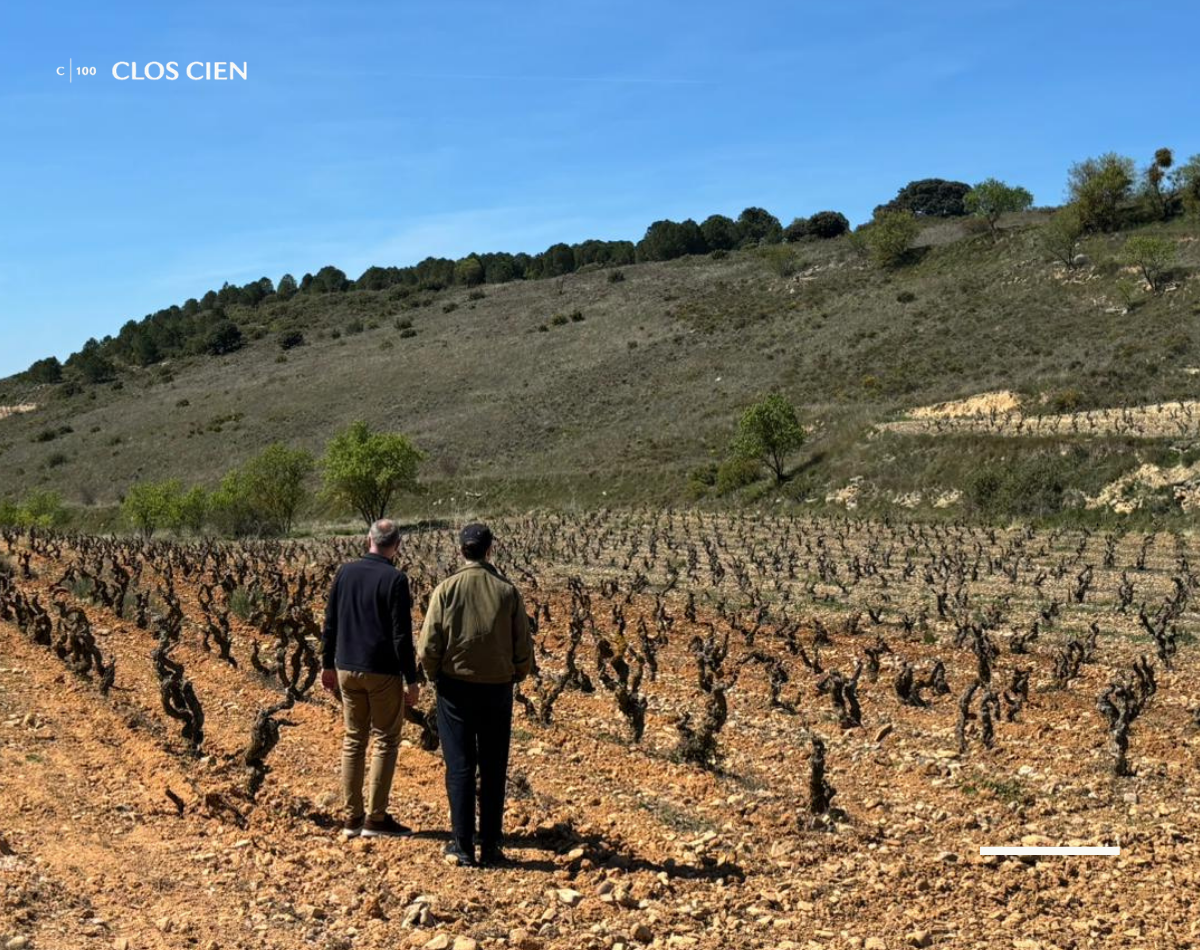
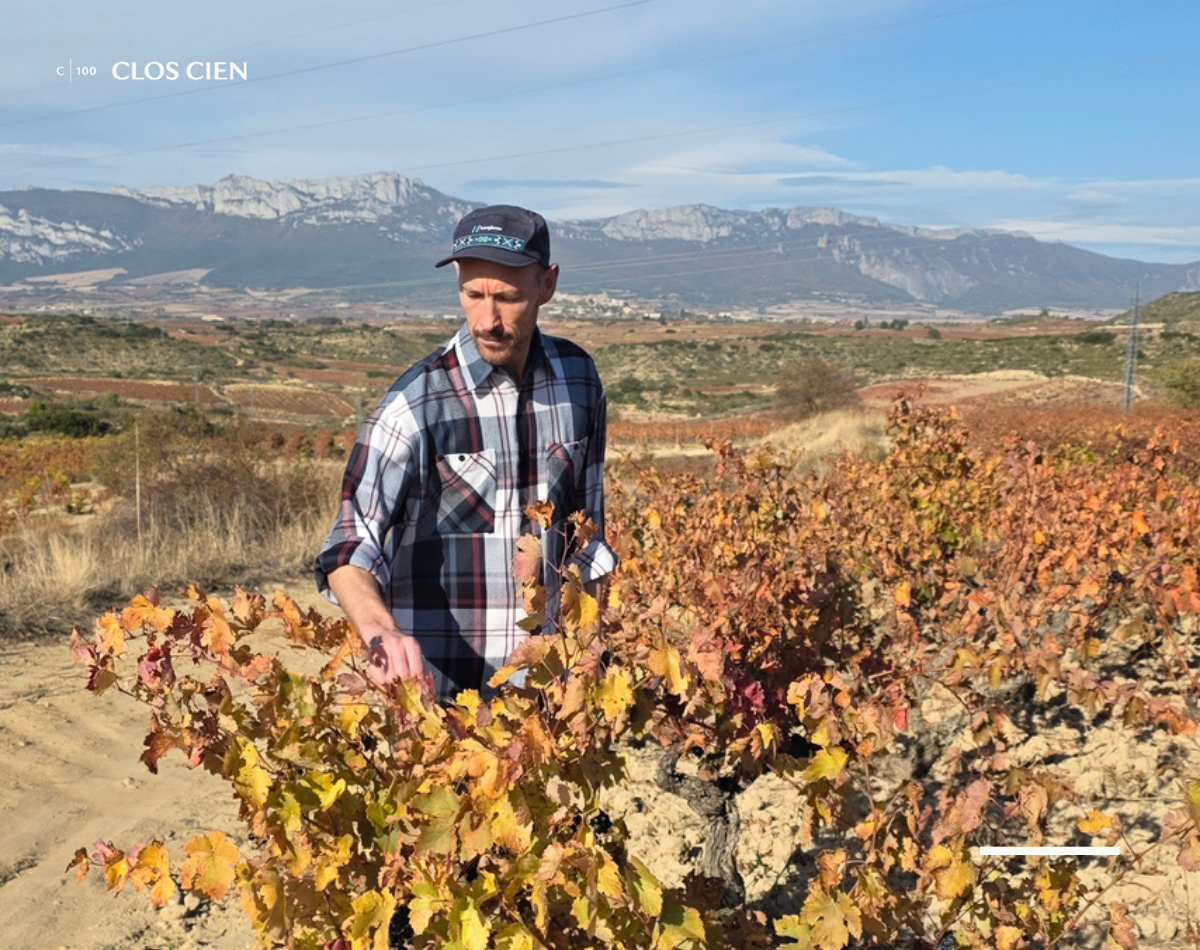
    When a member of ours stands in a vineyard in Samaniego, El Villar or Laguardia and looks at vines planted sixty or seventy years ago, they are not looking at an agricultural asset. They are looking at a living record of decisions made by the people who farmed that land before them. Those decisions accumulated over decades into the soil chemistry, the root depth, and the natural yield regulation. That is not just quality. That is resilience.

    The Market Gap That Remains

    What remains true is that the market has not yet fully priced in the difference. A wine from 80-year-old Tempranillo vines in Rioja Alavesa may not command the same premium as a grand cru Burgundy made from vines of comparable age. That gap is narrowing, and for those paying attention, Rioja’s old-vine story is one of the most compelling undervalued narratives in the fine wine world today.

    CLOS CIEN is a fractional vineyard ownership and premium winemaking platform based in Rioja Alavesa, DOCa Rioja. Members create their own fine wines from old-vine parcels with a minimum age of 35 years. For further information, visit closcien.com

  • Meet the Maker: Ali on Building CLOS CIEN From the Inside Out

    Meet the Maker: Ali on Building CLOS CIEN From the Inside Out

    The Man Behind the Membership

    Ali on building CLOS CIEN from the inside out

    Ask Ali what a typical day looks like and he will pause, then smile. “A typical day I’m not sure I have one.” It is not evasion. It is simply the truth of what it means to be the operational and commercial heartbeat of CLOS CIEN, a membership unlike anything else in the wine world.

    On any given morning, Ali might be reviewing contracts for a new member joining at the Estate tier double-checking the logistics of their onboarding, making sure the transition from prospect to owner is seamless. By afternoon, he’s liaising with a long-standing member about the label design for their private bottling, calling on two decades of freelance design experience to translate someone’s vision into something they’ll hold in their hands years from now. By evening, he might be fielding questions about vineyard conditions, harvest timelines, or simply how the wine is evolving.

    “Every case is different,” he says. “Different tiers, different expectations, different people. The job is making sure each of them feels like the only one.”

    The Quiet Promise

    There is something about CLOS CIEN that prospective members consistently underestimate I think, Ali says. It is not the wine, which speaks for itself. It is not the land, which Ignacio del Campo has spent years understanding. It is the team working quietly in the background: the winemakers, the agronomists, the people whose expertise means that members never have to worry about any of it.

    “This is exactly how we want it,” he says. “Under the radar. Things just work. That’s the promise we make at the start of every journey. Vineyard ownership without any hassle.”

    The wine world is saturated with investment propositions. CLOS CIEN is not trying to be one of them. “This is not you on your own, running a vineyard and managing every aspect of it,” Ali explains. “You have a real asset. You have physical wine that we can help you commercialise. But above all, we’re giving people an alternative asset nestled inside a genuinely unique experience.”

    Keeping the Relationship Alive

    Vineyard membership is, by nature, a long-distance relationship for most of the year. Members are in London, Geneva, Dubai, or New York while their vines are in Rioja. Ali thinks carefully about how to keep that connection real.

    “We keep members up to date through educational pieces and personal insights from their own particular journey. Images, video, whatever brings the vineyard to life from wherever they are. And we’re available at any time to answer questions. About anything really.”

    A membership portal is in development. A single, always-on hub where every update, document, and milestone will live. But for Ali, technology is only the infrastructure. The foundation is something more fundamental: transparency.

    “One of our core philosophies is transparency. And that’s the way it will always be. We’re proud of that.”

    The Moment It Becomes Real

    Asked what has made him most proud, Ali does not reach for a metric or a milestone. He reaches for a feeling.

    “The first visit over to the bodega. Meeting real people who had taken this on and believed in the project. It’s all good having a concept on paper, but when someone buys into your vision and is willing to join you that’s always a proud moment, beyond words.”

    And then there is the second moment. The one that happens for every member, at every visit. The moment the concept becomes physical. The working bodega. The rows of vines. The realisation that it is not a promise anymore it is happening.

    “It’s always there — that twinkle of excitement. Every time.”

    CLOS CIEN membership is open to a limited number of founding members. To learn more, get in touch with Ali directly.

  • Member Series: My Third Month
The Green Resurrection (and the moment I stopped worrying)

    Member Series: My Third Month The Green Resurrection (and the moment I stopped worrying)

    March at CLOS CIEN.
    The vines are waking up. And so, I think, am I.

    January was pruning. February, the vine wept its first sap and I learned what it meant. I thought I was beginning to understand the rhythm of this place. Then March arrived and the vineyard changed so completely that I had to start paying attention all over again.

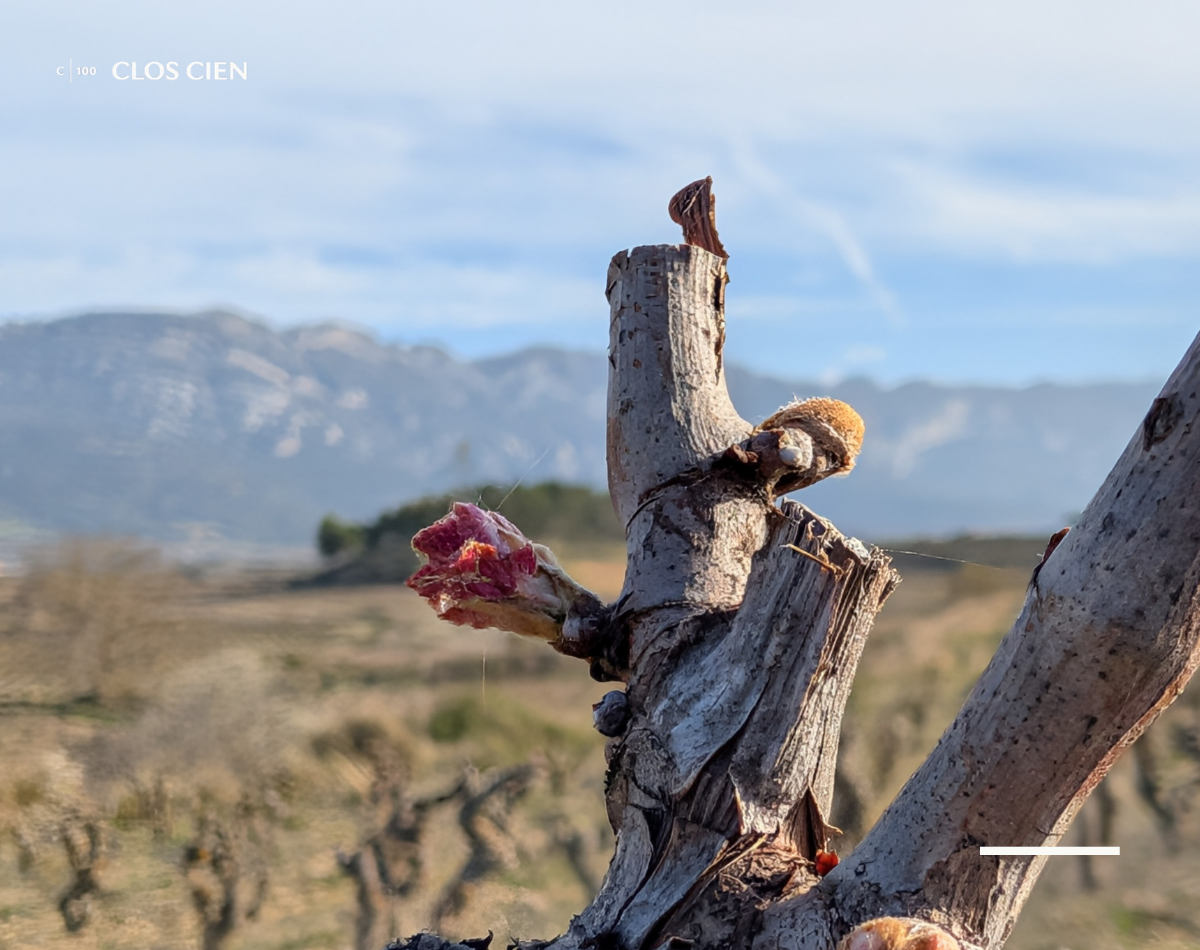
    Desborre. Budburst. I had been warned to watch for it. What I was not prepared for was how it would actually feel to see it.

    The Morning I Saw It

    I was standing at the edge of one of the plots on a morning in mid-March, the kind of clear, cold morning where the Cantabrian Mountains are so sharp you feel like you could reach them. And there, at the tips of the pruning cuts, the first woolly green shoots were pushing out. Small. Almost furry. Unmistakably alive.

    After months of bare brown wood and patience, those tiny green points felt enormous.

    This is what all of February was building toward. The sap that wept from the cuts last month was the vine’s vascular system clearing itself, sending water and minerals upward. Now that pressure has done its work. When soil temperature tips above a certain point, the buds can no longer hold back. They swell, split their protective coating, and push out the first growth of the 2026 vintage.

    The vine has survived winter. The growing season has begun. Your wine is on its way.

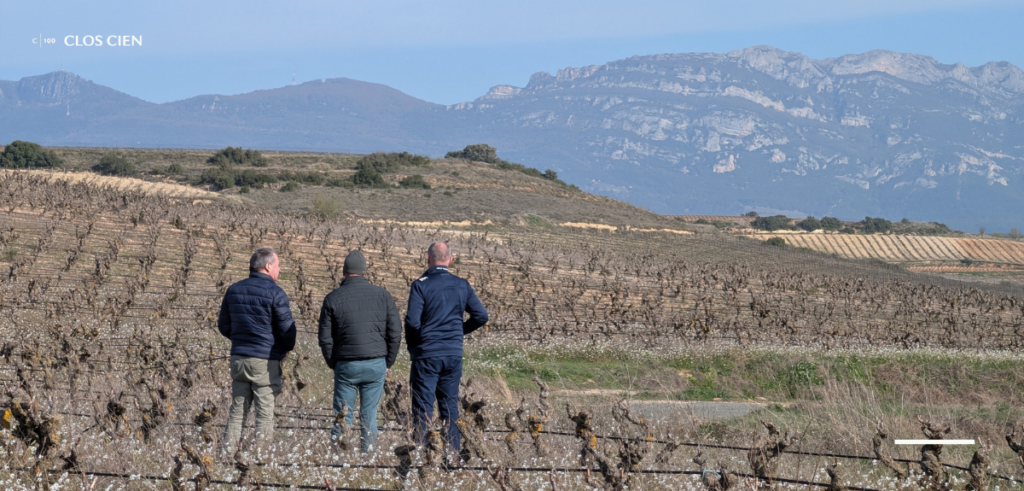
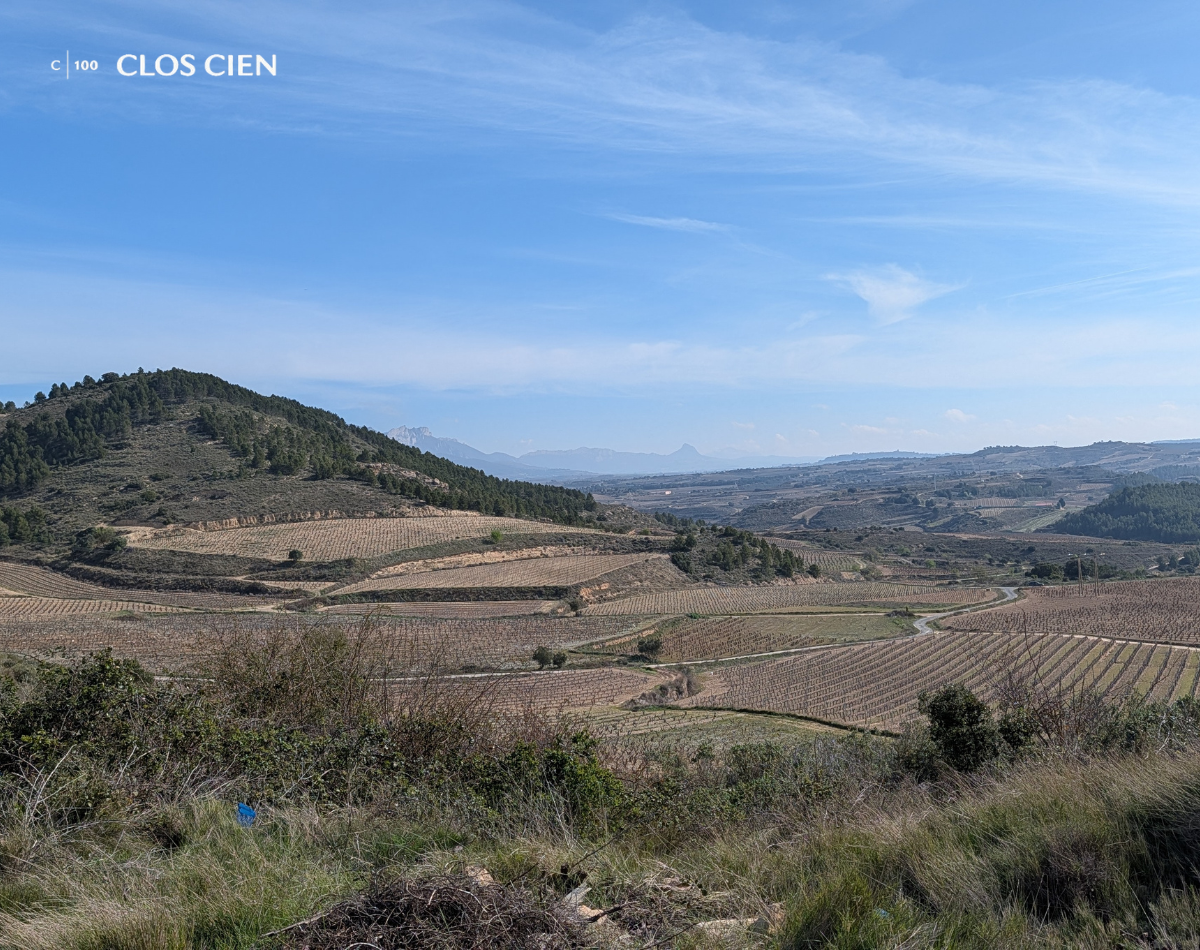
    Three members of the CLOS CIEN team standing among dormant Vaso vine rows in La Rioja, looking out over the vineyard landscape toward the Cantabrian Mountains in early spring

    Image Source: CLOS CIEN

    What I Did Not Know About a Bud

    Here is something that changed how I think about these vines entirely. What looks like a single dormant bud on each shoot is actually three buds nested inside each other. Millions of years of evolution with one purpose: the vine survives no matter what.

    The primary bud carries this year’s fruit clusters. It is the one everything is organised around. If a late frost kills it, the secondary bud pushes out, carrying roughly half the fruit. If that is lost too, the tertiary bud is the last resort, with almost no fruit but the vine lives.

    I keep thinking about this. The vine has been planning for disaster since before humans existed. It is, in the most practical sense, built to last.

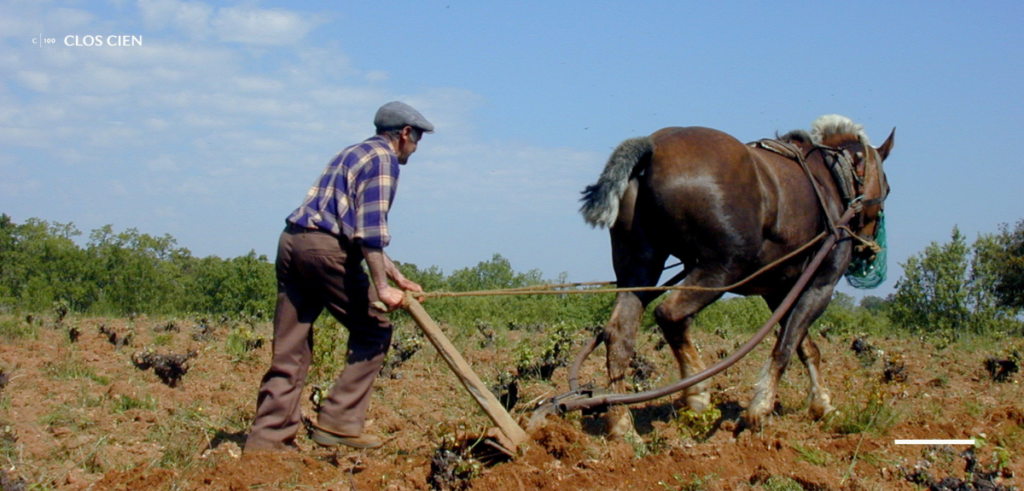
    A vintner using a horse-drawn plough to turn the soil between old Vaso bush vines during La Labranza, the traditional spring ploughing, in a Spanish vineyard with red clay soil

    Image Source: CLOS CIEN

    The First Work of Spring

    While the buds were pushing green outside, the team was moving through the vineyard doing two things I had never heard of before.

    La Labranza, the first ploughing of spring. A light pass through the cover crops and winter weeds between the vines, turning the green matter into the soil where it breaks down and releases nitrogen exactly when the vine needs it. But also, and this surprised me, sealing moisture in. Ploughing breaks the surface crust and stops the process that pulls water upward through the soil and evaporates it into the air. The winter rains get locked underground so the roots can reach them in July when the vineyard runs dry. I had never thought about soil as something that holds memory. It does.

    Then Desnietado, suckering. New shoots appear at the base of the trunk, below the main head of the vine. They are called nietos in Spanish. Grandchildren. They sound charming. They are thieves. Every bit of sap they take is sap the fruit-bearing shoots do not get. In March, while they are still soft, they are snapped off by hand. Tedious, I was told. Essential.

    In the Cellar: The Art of the Blend

    While the vines were waking up outside, something equally important was happening inside the bodega.

    March is the traditional month for El Ensamblaje, the blending. The 2024 harvest has been kept deliberately apart in separate barrels since it was made. Tempranillo from a sandy plot. Graciano from a clay-heavy hillside. Wine from older vines alongside wine from younger ones. Each developing its own character in the dark.

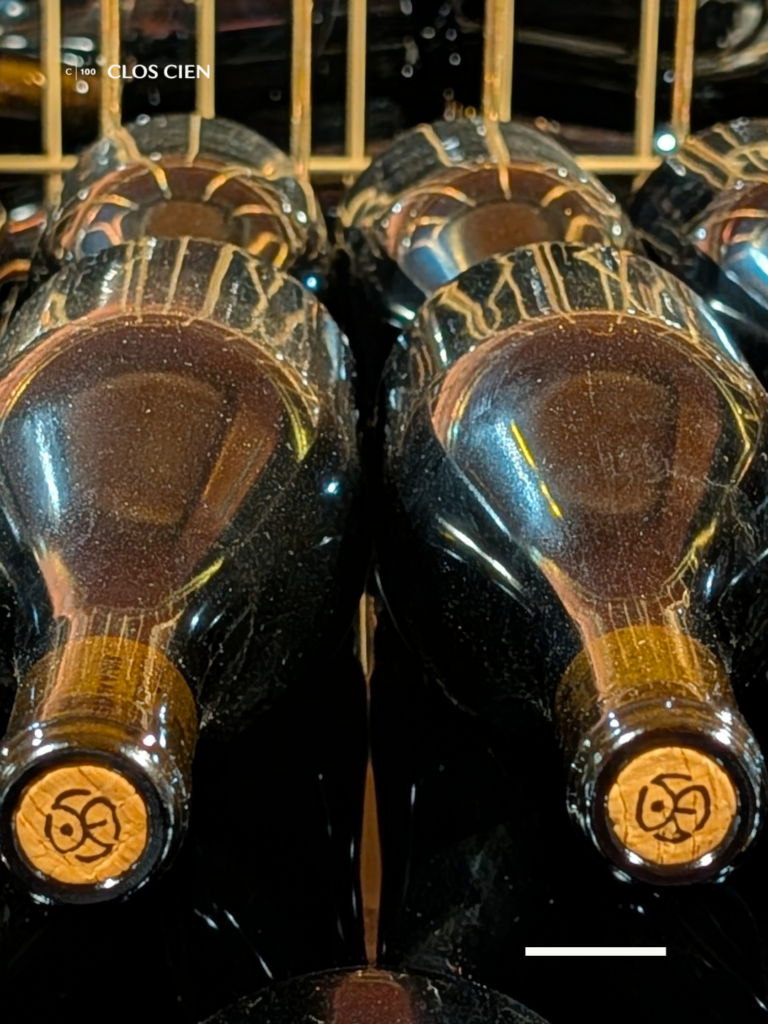
    CLOS CIEN wine bottles resting horizontally in a cellar rack during the ageing process, showing the branded cork and dusty glass of wines maturing in Rioja, Spain

    Now Jaione and the technical team sit down with all of it and decide how these separate voices come together to tell one story. I was told that blending sounds romantic. In practice it begins with a notebook, a pipette, and dozens of small glasses. Ninety parts this, ten parts that. Taste blind. Adjust. Repeat.

    What eventually goes into the bottle is no longer a collection of parts. It is one thing.

    What March Actually Is

    I came into this thinking the exciting months would be harvest and budburst. They are. But I am learning that every month here is doing something that matters.

    Those first green shoots are your 2026 vintage beginning. The blended wine resting in tank is your 2024 vintage finding its final shape. Both things are happening at the same time. The vineyard is always at multiple points in the story simultaneously.

    Next month: the primera inflorescencia, the first tiny flower clusters, the earliest indication of where this year’s grapes will actually form. One of the most fragile moments of the growing season. I am already nervous about the frost.

    Want to follow along as my first year at CLOS CIEN unfolds?

  • Rioja vs. Bordeaux: What Wine Collectors and Investors Need to Know

    Rioja vs. Bordeaux: What Wine Collectors and Investors Need to Know

    The case for Rioja has never been stronger.
    And the numbers prove it.

    For decades, Bordeaux has been the default answer for serious wine collectors and vineyard investors. The prestige is real. So is the price tag. But a growing number of collectors are asking a different question: what if Bordeaux is no longer the smartest move?

    La Rioja is not a consolation prize. It is an active choice, and we think, we know that is for good reason.


    The Price Gap Is Not Subtle

    Let’s start where the viral conversation always starts: land prices.

    In 2024, vineyard land in La Rioja averaged around €40,000 per hectare for dry-farmed plots. Bordeaux-Aquitaine as a whole averaged over €101,000 per hectare. And that figure is dragged down by the entry-level appellations. Step into Saint-Emilion or Pauillac and you are looking at €290,000 to well over €2 million per hectare.

    For the same investment that buys you a modest slice of mid-tier Bordeaux, you can own a meaningful, productive parcel in one of the world’s most celebrated wine regions and with room to grow.

    And Rioja is growing. La Rioja land prices have risen consistently at around 3% annually over the past two decades, making it one of Spain’s strongest-appreciating wine regions. Bordeaux, by contrast, has seen significant price corrections at the entry and mid-level in recent years.

    The Wine Is Not a Compromise

    Some collectors hesitate here. They assume “more affordable” means “less serious.” It does not. It’s as simple as nobody had Rioja on their radar before. So that’s why we build CLOS CIEN.

    Rioja produces age-worthy, structured reds built on Tempranillo a grape that rewards patience in the cellar just as Cabernet Sauvignon does. The classification system (Crianza, Reserva, Gran Reserva) is driven entirely by ageing requirements, not marketing. A Gran Reserva has spent a minimum of five years maturing before it reaches you, with at least two of those in oak. That is not a shortcut wine now is it?

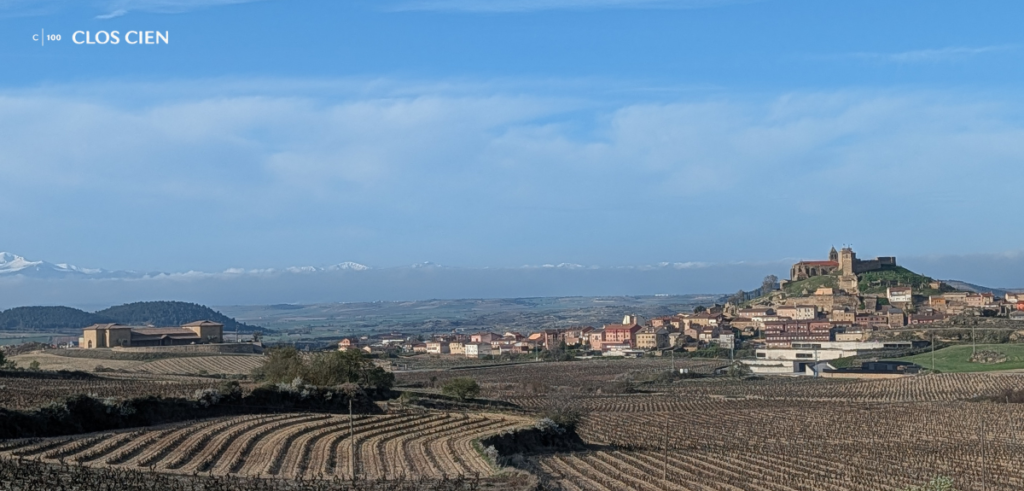
    San Vicente de la Sonsierra, La Rioja, March 2026. Dormant vines frame one of the region's most iconic hilltop villages a landscape shaped by altitude, continental climate, and centuries of winegrowing tradition.

    Bordeaux built its reputation on terroir, tradition, and time. Rioja can match all three! And increasingly, at the international level, it does. Gran Reserva volumes are growing significantly while standard Rioja production softens, a clear signal that the market is moving upmarket.

    Terroir That Tells a Story

    Rioja sits at an altitude – between 300 and 700 metres above sea level – along the Ebro River, with the Cantabrian Mountains to the north acting as a natural shield against Atlantic rain. The result is a continental climate with warm, dry summers and cold winters. Daily temperature swings during the growing season help grapes develop both sugar and acidity, the combination that produces wines with structure and longevity.

    The three sub-zones – Rioja Alta, Rioja Alavesa, and Rioja Oriental – each offer distinct expressions. Clay-limestone soils. Alluvial plains. Iron-rich red earth. The diversity is real, and it creates wines that tell you exactly where they are from.

    Bordeaux has its gravel banks and its Left Bank-Right Bank distinction. Rioja has its own layered complexity and it is far less picked over.

    Lifestyle and Culture: the Intangible Return

    Numbers matter. So does everything else.

    Bordeaux is a saturated luxury market. Buying into it today means buying into an established hierarchy where your position is clearly defined from the start.

    Rioja is different. The culture is generous, community-minded, and genuinely welcoming to serious newcomers. The food culture – pintxos, local markets, the rhythms of a working vineyard town – is inseparable from the wine. Owners are not just investors; they are participants in something alive.

    La Rioja is also one of the most visited wine regions in Spain, with strong gastro-tourism growth. That is not irrelevant when you are thinking about the long-term value of your investment.

    Resources used:

    • Spanish vineyard land prices (La Rioja ~€40,155/ha, 3% annual appreciation):Vinetur.com – Spanish Vineyard Land Prices Edge Up to €16,327 per Hectare in 2024 Amid Regional Swings (published November 2025)

    • Bordeaux-Aquitaine average (€101,100/ha): iDealwine blog – How much does a hectare of vineyard cost? (data from SAFER 2024/2025 report)

    • Bordeaux appellation specifics (Saint-Emilion €290,000, Pauillac €2M+): Cross-referenced between the iDealwine blog and Bordeaux Wine Enthusiasts forum (original SAFER figures)

    • Gran Reserva market growth signal: wein.plus Wine News – Vineyard prices on the Côte-d’Or continue to rise (March 2026 reference to Rioja losing standard volume but Gran Reserva growing significantly)

    • General Bordeaux vineyard price context: Ampelio.fr – French Vineyard Prices: What You Need to Know in 2025 (October 2025)

    The Collector’s Summary

     RiojaBordeaux
    Land Price (avg/ha)~€40,000€101,000–€2M+
    Price appreciation~3% annually (20yr avg)Mixed; corrections at mid-level
    Aging PotentialHigh (Gran Reserva: 5+ years)High
    Market TrajectoryUpmarket shift underwayConsolidation at premium end
    Entry AccessibilityStrongLimited at quality tier
    Culture & LifestyleCommunity, open, growingEstablished, hierarchical

    The question for collectors and investors is no longer whether Rioja belongs in the same conversation as Bordeaux. It does. The question is whether you want to buy into a market that has already peaked or one that is still finding its ceiling.

    Curious about what vineyard ownership in Rioja actually looks like? Explore the CLOS CIEN membership and see how your investment takes root.

  • La Rioja Grape Varieties – Educational Series (7 of 10)

    La Rioja Grape Varieties – Educational Series (7 of 10)

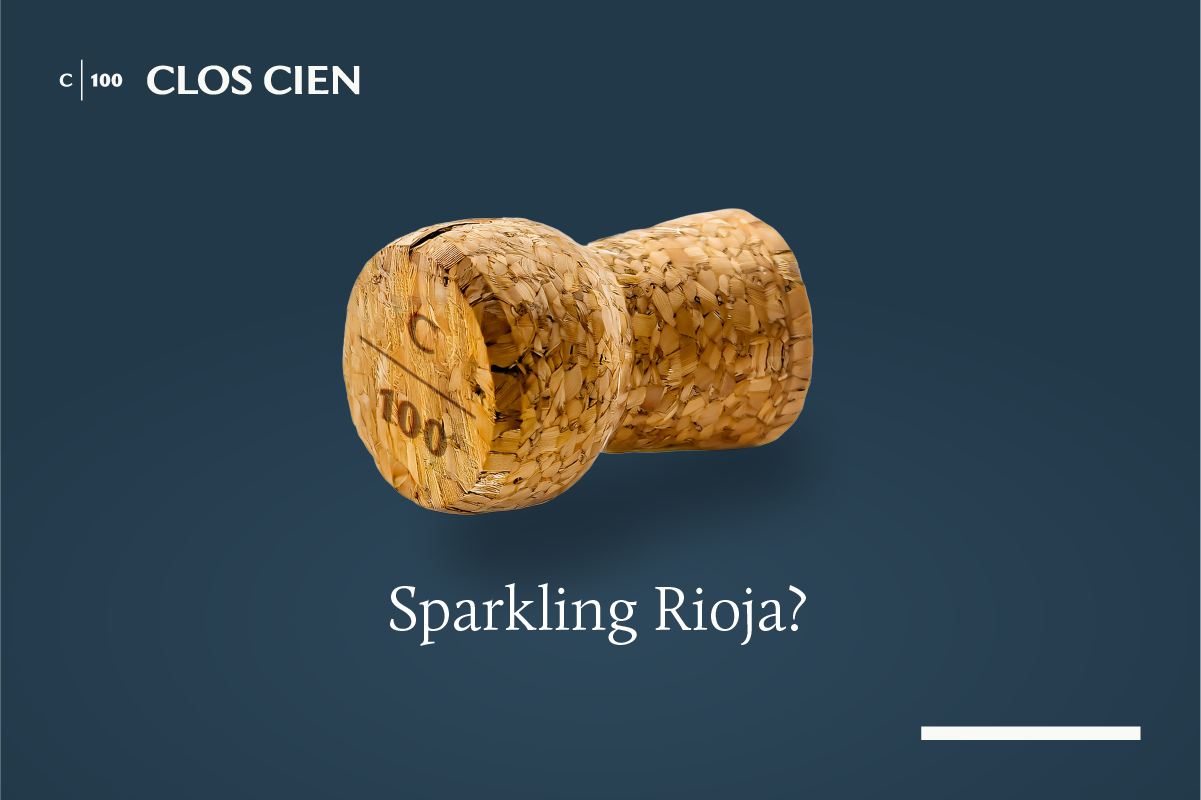
    THE UNEXPECTED – Sparkling Rioja

    A category that surprised everyone

    When you think of Rioja, sparkling wine probably isn’t the first thing that comes to mind. For over a century, this region built its reputation on aged reds – Tempranillo-based wines that spend years in American oak barrels before release. Around 93% of Rioja’s plantings are red grapes. Sparkling wine? That was Cava’s territory, or Champagne’s domain.

    Then in 2017, the Consejo Regulador made it official. They created a new category called “Espumosos de Calidad de Rioja” – quality sparkling wines from Rioja. Within this designation sits Gran Añada, which requires the wines to age on their lees for at least 36 months. The same requirement as vintage Champagne.

    This wasn’t a complete surprise to everyone. Some Rioja producers had been making sparkling wines for decades, even over a century in a few cases. Parts of Rioja have long been authorized to produce Cava under Spain’s broader sparkling wine denomination. But this was different – these were distinctly Riojan sparklers with their own identity and regulations.

    What makes Rioja sparklers different

    The method is the same as Champagne and Cava – traditional method, or “método tradicional” in Spanish. The second fermentation happens in the bottle, creating those fine, persistent bubbles. The wines must be hand-harvested (for vintage Gran Añada), undergo second fermentation in bottle, and age on their lees for extended periods. Minimum 15 months for the basic category, 24 months for Reserva, and 36 months for Gran Añada.

    But here’s where it gets interesting: the grapes are different. Champagne uses Chardonnay, Pinot Noir, and Pinot Meunier. Cava traditionally relies on Macabeo, Parellada, and Xarel·lo – three white varieties you’ve probably never heard of unless you’re deep into Spanish wine.

    Rioja uses its own varieties. All the authorized red and white grapes from the region are permitted: Viura (the workhorse white), Tempranillo Blanco (that 1988 mutation), Malvasía, Garnacha Blanca, even Chardonnay and Sauvignon Blanc in the mix. For rosé sparklers, at least 25% must be red grapes – Tempranillo, Garnacha, Graciano, Mazuelo, or Maturana Tinta.

    This means sparkling Rioja can taste radically different from Champagne or Cava. Some producers make blanc de blancs styles from pure Viura. Others blend multiple varieties. There are even experimental versions using the nearly-extinct indigenous grapes. The toasty, brioche-like notes from lees aging combine with the fresh fruit character of Rioja’s grapes – citrus, green apple, stone fruit, sometimes hazelnut or dried Mediterranean herbs.

    The alcohol must sit between 11-13%, keeping things refreshing. Sweetness levels follow the same categories as Champagne: Brut Nature (0-3 g/l sugar), Extra Brut (0-6 g/l), and Brut (0-12 g/l). Most producers aim for Brut or Extra Brut – dry, food-friendly styles.

    Why is this surprising?

    Rioja’s entire identity revolves around aging. The region’s classification system – Crianza, Reserva, Gran Reserva – is based on how long wines spend in oak barrels and bottles before release. Some Gran Reservas aren’t released for a decade after harvest. The famous producers hold massive barrel inventories. It’s a region that celebrates patience and tradition.

    Sparkling wine works differently. It’s about freshness, precision, and immediate appeal. The base wines are kept neutral – low alcohol, high acidity, minimal oak influence. Then comes the magic of bottle fermentation and lees aging. It’s a completely different mindset from making age-worthy reds.

    The surprise is that Rioja, famous for doing one thing extraordinarily well, officially embraced something entirely different. And they didn’t just dabble – they created serious regulations, requiring the same extended aging as vintage Champagne for their top tier.

    It signals something important: Rioja isn’t stuck in amber. The region that defined Spanish wine through tradition is now exploring what else its grapes and terroir can do.

    How does it compare?

    Against Champagne: More affordable (significantly), different fruit profile (Mediterranean versus northern French), often less acidic but with similar complexity from lees aging. Champagne’s cool climate creates wines with razor-sharp acidity and austere fruit. Rioja’s warmer conditions produce riper fruit flavors while still maintaining freshness.

    Against Cava: Similar traditional method production, but completely different grapes and terroir. Cava comes primarily from Catalonia’s Penedès region (though it’s produced in other Spanish regions too). The Mediterranean climate is shared, but the grape varieties give Cava its distinctive profile – often crisper, with green apple and almond notes. Sparkling Rioja shows more diversity because it can use the region’s full palette of varieties.

    The real difference? Sparkling Rioja can use Tempranillo – Spain’s most famous red grape – in the blend for rosé versions. This gives some sparklers a character you won’t find anywhere else. Imagine the structure of Tempranillo translated into bubbles.

    The current reality

    Sparkling Rioja remains tiny – a fraction of the region’s production. Most producers still focus on what made them famous: age-worthy reds. But interest is growing. The first single-vineyard sparkling Viñedo Singular was recently approved, combining two of Rioja’s new classifications in one bottle.

    These aren’t wines trying to be Champagne or compete with Cava on price. They’re distinctly Riojan, carrying the region’s personality – its grapes, its terroir, its commitment to quality – into a completely different format. That’s what makes them worth paying attention to.

  • La Rioja Grape Varieties – Educational Series (6 of 10)

    La Rioja Grape Varieties – Educational Series (6 of 10)

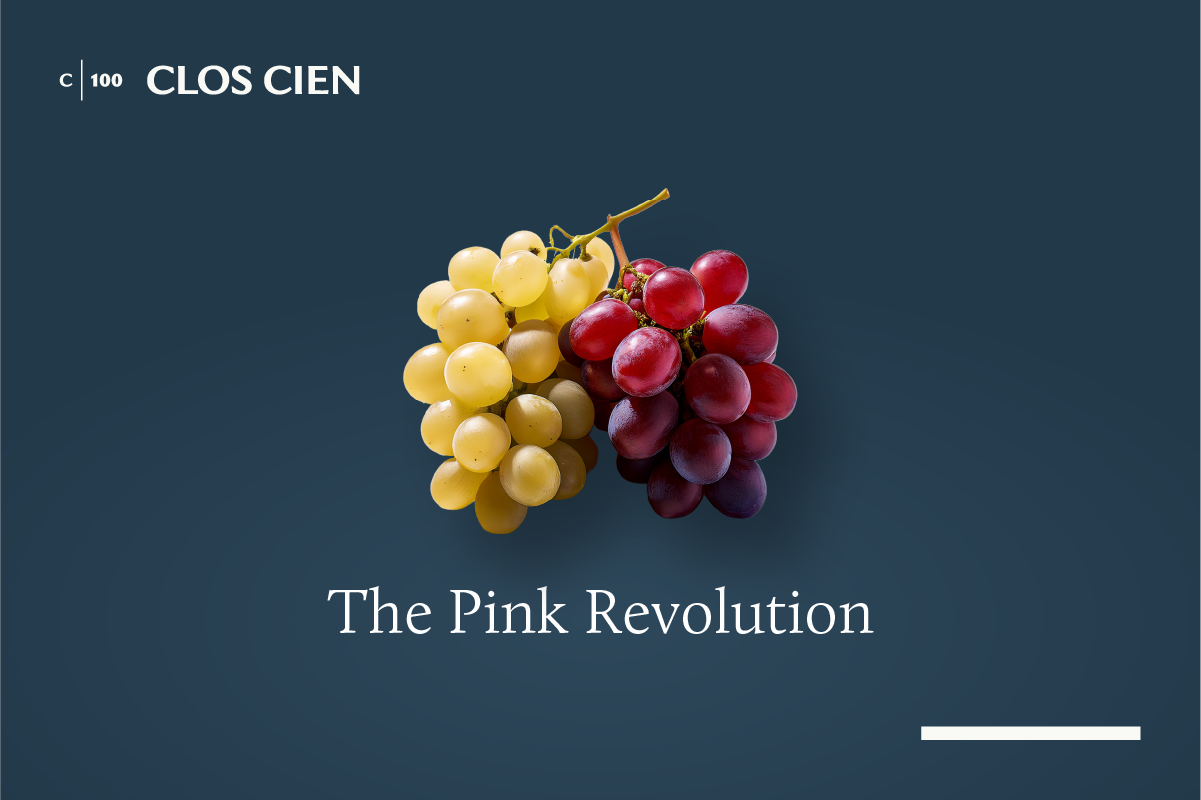
    THE PINK REVOLUTION – Rosado

    From clarete to modern rosé

    Rioja has a long tradition of making pink wines, though the style has evolved dramatically. The original version was called clarete – a field blend of red and white grapes with one to two days of maceration. These could range from dark pink to pale red depending on the vintage and the percentage of red and white grapes used.

    Under current regulations, rosado wines must contain at least 25% of red grapes (Tempranillo, Garnacha, Graciano, Mazuelo, or Maturana Tinta). They can include white varieties like Chardonnay, Sauvignon Blanc, or Verdejo, but these cannot be the predominant variety in the blend.

    Modern Rioja rosados often use the sangrado (saignée) technique. This “bleeding off” of juice from red wine tanks results in deeper-colored, richer wines with pronounced strawberry and citrus notes.

    There’s a growing movement toward terroir-driven rosados. Producers are increasingly sourcing grapes from specific sites rather than blending from across the region. High-altitude vineyards (500 meters and above) are particularly sought after for rosado production, as the cooler temperatures help retain freshness and acidity.

    Climate change is making these higher-altitude sites more viable. The highest Rioja vineyards reach around 750-800 meters, where cooler conditions create wines with bright acidity and elegant fruit profiles.os

  • La Rioja Grape Varieties – Educational Series (5 of 10)

    La Rioja Grape Varieties – Educational Series (5 of 10)

    THE INNOVATORS – White Varieties

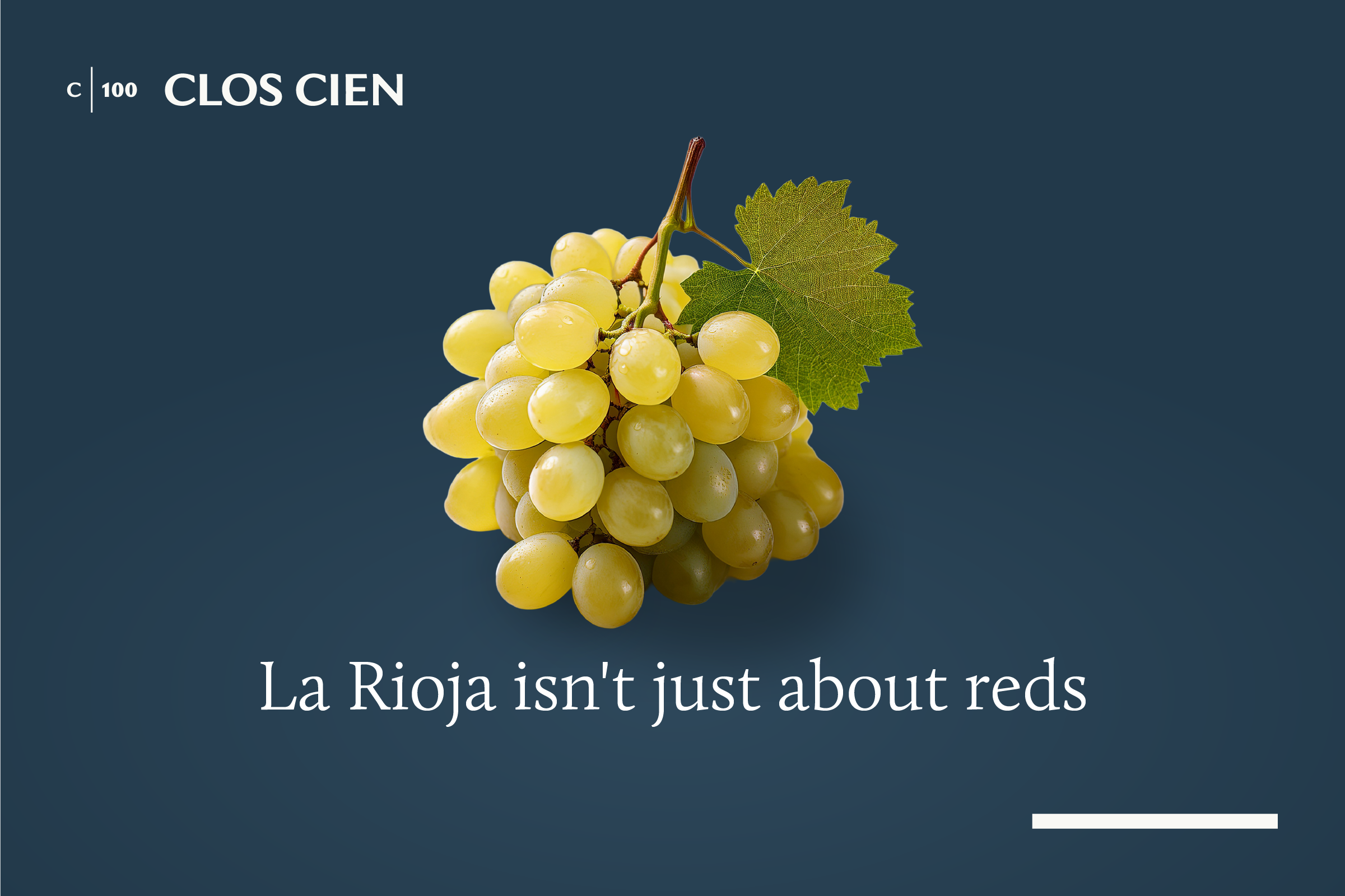
    La Rioja isn’t just about reds

    Viura accounts for around 69% of white grape plantings in Rioja. It’s also called Macabeo in most of Spain and has been the dominant white variety in the region since the 1970s.

    Viura is vigorous and makes versatile, food-friendly wines with subtle citrus and green apple notes and moderate acidity. The vine undergoes bud break later than many varieties, which helps protect it from spring frosts, though it tends to overproduce. Nearly half of Rioja’s Viura vines are more than 40 years old.

    But Rioja has been bringing back native white varieties. Tempranillo Blanco comes from a natural genetic mutation discovered in 1988 in a single cane of a red Tempranillo vine in an old vineyard in Murillo de Río Leza. It now makes up around 12% of white plantings. It has fruity, intense aromas of bananas, citrus fruit and tropical fruit.

    Maturana Blanca is the oldest grape variety to have a written record in Rioja, being mentioned in a text dating to 1622. It accounts for less than 1% of white plantings. Maturana Blanca wines are greenish yellow, with fruity aromas of apples underscored by grassy notes. It’s exclusive to Rioja.

    Modern additions include Verdejo at around 5%, Chardonnay at around 2%, and Sauvignon Blanc at around 3%. These foreign white varieties cannot be the predominant variety in the final composition of the wine.

    White Rioja can be fresh and young or aged in oak for years, developing complexity that rivals great white Burgundy.

  • La Rioja Grape Varieties – Educational Series (4 of 10)

    La Rioja Grape Varieties – Educational Series (4 of 10)

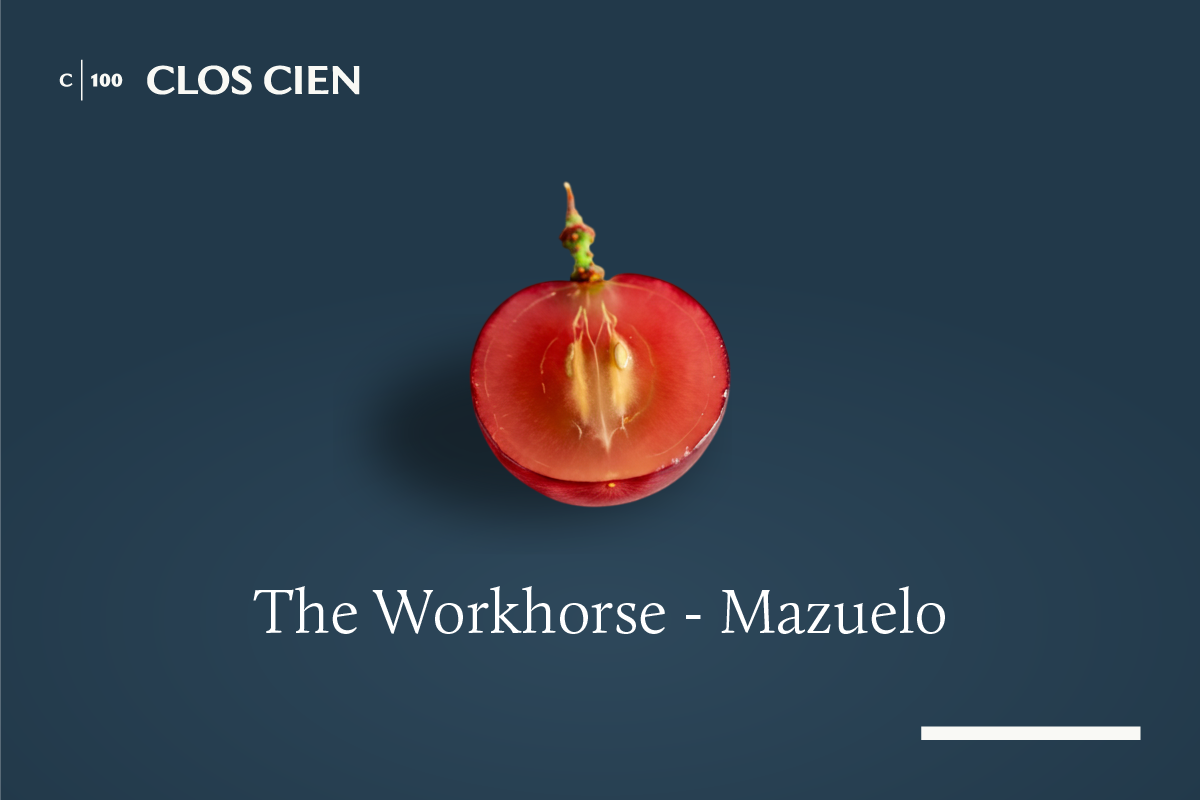
    THE WORKHORSE – Mazuelo (Cariñena)

    Mazuelo makes up around 2% of La Rioja’s red grape plantings. In most of the wine world, this grape is called Carignan or Cariñena, but in Rioja it goes by Mazuelo.

    Tempranillo-heavy wines from Rioja sometimes include small amounts of Mazuelo to add acidity, color and tannin. The grape has high tannins, high acidity and is relatively full-bodied.

    That toughness is exactly why blenders want it. In less fertile areas, with good soils, old vines and limited production, quality wines can be obtained. Mazuelo needs higher heat to ripen, with late budding and mid-season to late ripening. It’s particularly sensitive to powdery mildew.

    Outside of Catalonia (where it’s more common as Cariñena), Mazuelo is mostly a secondary blending variety in Rioja, though a few producers, such as Marqués de Murrieta, do make varietal examples.

    Most drinkers will never taste a 100% Mazuelo wine. But in every Gran Reserva where it appears, even in small amounts, it’s doing the structural work that allows those wines to age for decades.

  • 23 Regional Wine Podcasts – Curated Wine Podcast Series #4

    23 Regional Wine Podcasts – Curated Wine Podcast Series #4

    🗺️ REGIONAL WINE PODCASTS

    Focused on specific wine regions and local wine scenes

    Pour Temecula

    Hosted by: Rick DeLucio & Shannon Cole
    Synopsis: Temecula and Southern California’s only podcast devoted to the local wine, beer, and beverage scene.
    Episodes: 20 | Started: 2025 | Country: United States
    Status: Active


    Texas Under Vine

    Hosted by: Scott Hall
    Synopsis: Exploring the many vineyards, wine businesses, and wine information found in the great state of Texas.
    Episodes: 70 | Started: 2022 | Country: United States
    Status: Active


    The Zonda Wine Podcast

    Hosted by: Shawn Zylberberg
    Synopsis: The Zonda Wine Podcast brings entertainment to the world of wine with monthly episodes featuring the most influential voices in the industry—glassmakers, sommeliers, critics, Masters of Wine, and more.
    Episodes: 5 | Started: 2025 | Country: United States
    Status: Active


    Indie Wine Podcast

    Hosted by: Matt Wood
    Synopsis: In depth interviews of smaller California producers and detailed episodes on California wine history.
    Episodes: 85 | Started: 2023 | Country: United States
    Status: Active


    We Know Texas Vino

    Hosted by: Will Donohue & Michel Woods
    Synopsis: Podcast about Texas Wineries and Vineyards and education of wine.
    Episodes: 120 | Started: 2023 | Country: United States
    Status: Active


    Cork Talk

    Hosted by: Tim Atkin
    Synopsis: All things NC wine, mead, cider and more!
    Episodes: 100 | Started: 2018 | Country: United States
    Status: Active


    Where Wine Takes You

    Hosted by: Adam Montiel
    Synopsis: Each episode is an intimate journey with owners, winemakers, growers, and personalities as they discuss the places and wines that have shaped the Paso Robles wine region.
    Episodes: 140 | Started: 2020 | Country: United States
    Status: Active


    On The Wine Road Podcast

    Hosted by: Jeff Davis
    Synopsis: Jeff Davis travels throughout California and reaches across the globe to share the stories of the fascinating people who craft the wine we love.
    Episodes: 195 | Started: 2014 | Country: United States
    Status: Active


    The Wine Show Australia

    Hosted by: Simon Nash, Jill Upton & Sam Isherwood
    Synopsis: Simon Nash, Jill Upton and Sam Isherwood interview wine industry personalities and uncover their stories and amazing tales from Australia.
    Episodes: 892 | Started: 2017 | Country: Australia
    Status: Active


    NZ Wine Podcast

    Hosted by: Boris Lamont
    Synopsis: The place to hear great stories from New Zealand winemakers, vineyards owners and others in the industry.
    Episodes: 97 | Started: 2017 | Country: New Zealand
    Status: Active


    UK Wine Show

    Hosted by: Chris Scott & Jane Scott
    Synopsis: Chris Scott and the UK Wine Show is a weekly podcast, exploring the wine scene here in the UK and around the world. Interviews with winemakers, producers, critics, wine bar owners. Almost all the good wine from around the world washes up on these shores.
    Episodes: 822 | Started: 2006 | Country: United Kingdom
    Status: Active


    Wine, Food & Travel with Marc Millon

    Hosted by: Marc Millon
    Synopsis: Discover the world of Italian wines, food, culture and travel with award-winning writer and podcaster Marc Millon.
    Episodes: 210 | Started: 2016 | Country: United Kingdom


    On the Road Edition

    Hosted by: Stevie Kim
    Synopsis: Stevie Kim’s irregular-schedule spin-off of the Italian Wine Podcast takes listeners on 10–20 minute audio field trips to Italy’s top wine regions, combining on-location interviews with vineyard owners, tasting notes, and travel insights.
    Episodes: 188 | Started: 2018 | Country: Italy
    Status: Active


    The Spanish Wine Experience

    Hosted by: Luke Darracott & Roque Madrid
    Synopsis: A fun and boozy journey through Spain and its wines.
    Episodes: 191 | Started: 2017 | Country: Spain
    Status: Active


    Drinks Adventures

    Hosted by: James Atikinson
    Synopsis: Wine lover? Craft beer fan? Based in Australia, but globally minded, Drinks Adventures covers all these drinks and more.
    Episodes: 266 | Started: 2018 | Country: Australia
    Status: Active


    The English Wine Diaries

    Hosted by: Rebecca Pitcairn
    Synopsis: From sommeliers to vineyard owners, hoteliers and celebs, discover how a love of wine – particularly that made on British soil – has helped shape guests lives and careers.
    Episodes: 95 | Started: 2021 | Country: United Kingdom
    Status: Active


    This is Texas Wine

    Hosted by: Shelly Wilfong
    Synopsis: Host Shelly Wilfong provides Texas-specific education, information on industry trends, legislative developments, and other important topics that impact the Texas wine industry.
    Episodes: 103 | Started: 2020 | Country: United States
    Status: Active


    Wine Road Podcast – The wine when and where of Sonoma County

    Hosted by: Marcy Gordon & Beth Costa
    Synopsis: Meet winemakers and winery owners and get the inside scoop from Sonoma County, CA.
    Episodes: 242 | Started: 2016 | Country: United States
    Status: Active


    Wine Road’s The Wine, When & Where

    Hosted by: Marcy Gordon & Beth Costa
    Synopsis: The Wine Road provides the Wine, When and Where of Northern Sonoma to locals and visitors with tips and news on events, wineries, restaurants, outdoor activities, and places to stay.
    Episodes: 233 | Started: 2016 | Country: United States
    Status: Active


    ON THE ROAD with MR CA WINE

    Hosted by: Chuck Cramer
    Synopsis: This podcast will take you ON THE ROAD, on a wine journey with cool guests ranging from experts who work in the business of wine and mates who simply love wine.
    Episodes: 230 | Started: 2020 | Country: United States
    Status: Active


    The Wine Makers

    Hosted by: Bart Hansen, Sam Coturri & Brian Casey
    Synopsis: Everything about the wine business that you want to know and learn about the winemakers you haven’t heard about before.
    Episodes: 378 | Started: 2017 | Country: United States
    Status: Active


    Wine Soundtrack USA

    Hosted by: Allison Levine
    Synopsis: WineSoundtrack is the international podcast that tells the story of wine through the voices of its key players: winemakers, oenologists, and entrepreneurs from around the world.
    Episodes: 300 | Started: 2018 | Country: United States
    Status: Active


    Italian Wine Podcast Book Club

    Hosted by: Richard Hough
    Synopsis: Monthly podcast series from Verona focusing on all aspects of wine writing.
    Episodes: 17 | Started: 2021 | Country: Italy
    Status: Active


  • 11 Business Wine Podcasts – Curated Wine Podcast Series #3

    11 Business Wine Podcasts – Curated Wine Podcast Series #3

     💼 WINE BUSINESS PODCASTS

    For industry professionals, importers, and wine trade

    Sustainable Wine

    Hosted by: Hanna Halmari
    Synopsis: The Sustainable Wine Podcast is the official podcast of the Sustainable Wine Roundtable (SWR)—the global coalition driving sustainability in the wine industry.
    Episodes: 220 | Started: 2020 | Country: United Kingdom
    Status: Active


    Asia Wine Market

    Hosted by: Roza Zharmukhambetova
    Synopsis: Explores the rapidly expanding Asian wine industry—examining regional consumer trends, import logistics, and market entry strategies across 20–40 minute interviews with producers, importers, and educators.
    Episodes: 12 | Started: 2025 | Country: Italy
    Status: Active


    Clubhouse Ambassadors’ Corner

    Hosted by: Rotating Hosts
    Synopsis: Each episode features engaging interviews with Italian winemakers, vineyard owners, and industry professionals, moderated by certified Italian Wine Ambassadors.
    Episodes: 197 | Started: 2020 | Country: Italy
    Status: Active


    Drinks Insider

    Hosted by: Felicity Carter
    Synopsis: Podcast, newsletter and content consultancy for the drinks trade.
    Episodes: 39 | Started: 2024 | Country: Germany
    Status: Active


    Business of Drinks

    Hosted by: Erica Duecy & Scott Rosenbaum
    Synopsis: Business of Drinks goes behind the bottle, interviewing founders and CEOs of fast-growing drinks companies on what’s resonating in the marketplace right now.
    Episodes: 77 | Started: 2023 | Country: USA
    Status: Active


    Wine Talks

    Hosted by: Paul Kalemkiarian
    Synopsis: All you knew about wine is about to bust wide open….we are going to talk about what really happens in the wine business and I’m taking no prisoners…
    Episodes: 440 | Country: United States
    Status: Active


    XChateau

    Hosted by: Peter Yeung & Robert Vernick
    Synopsis: A masterclass on the business of wine: insights, analysis, and perspectives on news and trends in the wine industry beyond winemaking, such as marketing, finance, and consumer trends.
    Episodes: 197 | Started: 2020 | Country: United States
    Status: Active


    The Wine CEO

    Hosted by: Sarah Roth
    Synopsis: Each week certified sommelier Sarah Roth highlights a variety, region, or winemaker to help make wine more fun and approachable for consumers!
    Episodes: 200 | Started: 2020 | Country: United States
    Status: Active


    Beyond Organic Wine

    Hosted by: Adam Huss
    Synopsis: Deep discussions about the ecological revolution of wine.
    Episodes: 203 | Started: 2018 | Country: United States
    Status: Active


    Bottled in China

    Hosted by: Emilie Steckenborn
    Synopsis: Curious about the latest in the global wine and drink scene? Join Emilie Steckenborn on the Bottled in China Podcast for engaging conversations with thought leaders, exploring the vibrant world of beverages through an Asian lens.
    Episodes: 195 | Started: 2016 | Country: China
    Status: Active


    Next Generation

    Hosted by: Various Hosts
    Synopsis: A weekly Italian Wine Podcast series that spotlights emerging winemaking talent and cutting-edge trends in Italian wine through in-depth interviews and panel discussions.
    Episodes: 131 | Started: 2022 | Country: Italy
    Status: Active