
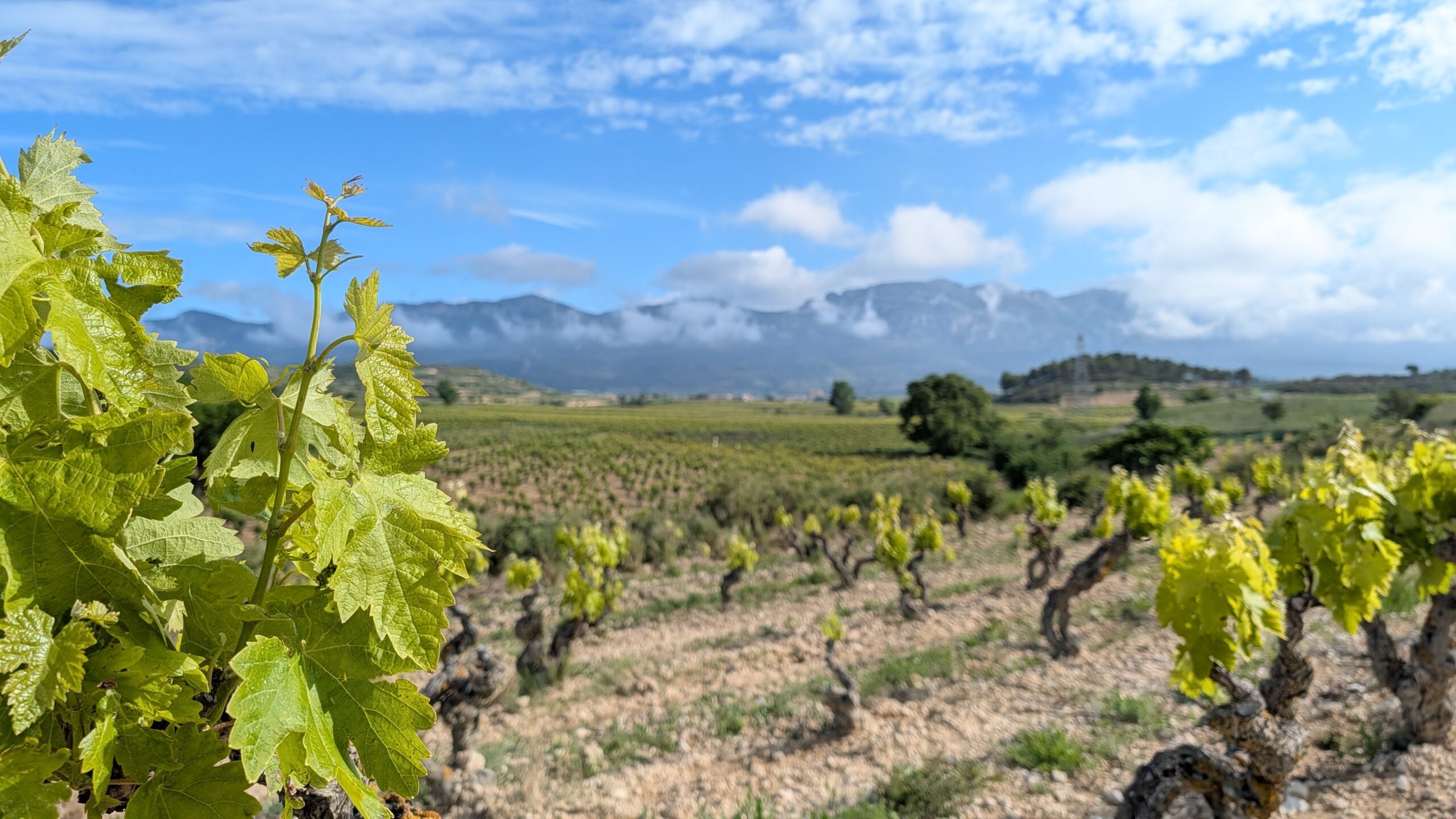
Fractional and managed ownership let you own a real parcel of a working vineyard, and the wine it makes, without buying the whole estate. Here is how it actually works, and where it works best.
You can own a vineyard without buying the land through fractional or managed ownership. Instead of purchasing an entire estate, you take ownership of a defined parcel within a working vineyard, or a share of one, while a professional team handles the farming and the winemaking. You hold a real, named piece of vineyard and receive an allocation of the wine it produces, without running anything yourself.
That is the short answer. The longer one is worth reading, because the model you choose, and the region you choose, decide almost everything about whether it works.
I have spent thirty years living and working in La Rioja. Over that time the dream of owning a vineyard has gone from something reserved for the very wealthy to something a far wider group of people can take part in. The change is real, but the marketing around it has run ahead of the substance. This guide is meant to slow that down and give you the honest version.
The four ways to own a vineyard
There are really only four structures, and they sit on a spectrum from total control and total cost at one end, to passive and accessible at the other.
| Model | What you actually own | Capital required | Your involvement | Main value driver |
|---|---|---|---|---|
| Full ownership | The entire vineyard and its land | Highest | Total. You farm it or hire and manage a team | Land value plus wine, with all the cost and risk on you |
| Leased plots | A lease, not the title | Moderate | Light to moderate | Lease income or grape sales |
| Fractional ownership | A defined parcel or share, with ownership rights | Lower | Passive, with optional hands-on participation | Land appreciation plus a wine allocation |
| Managed programme | A share that an operator runs on your behalf | Lower | Passive | Distributions from grape or wine sales |
Full ownership is the romantic version and the hardest one. Buying a whole vineyard means taking on land cost, equipment, payroll, climate risk, disease pressure, and a steep learning curve, often in a country whose property and tax rules you do not know. Most people who imagine owning a vineyard do not actually want to run an agricultural business. They want the vines, the place, and the wine.
The other three models exist to give you that without the operational weight. Fractional ownership is the one most people mean when they ask how to own a vineyard without buying the land, so that is where the rest of this guide spends its time.
Why you do not need to buy the whole vineyard
A vineyard is a long-term asset that rewards patience and expertise. The people who consistently make good wine from a parcel are the ones who have farmed that parcel for years and understand its soil, its aspect, and its moods. Buying your way into that knowledge from scratch is expensive and slow.
Fractional and managed models let you own the part that holds the value, a real piece of productive vineyard, while the people who already have the expertise keep doing the work. You get title or a clear contractual ownership right to a defined area, the wine that area produces, and the option to be as involved as you like, from walking the rows at harvest to leaving everything to the team. The barrier to entry drops sharply, and so does the risk that comes from doing something difficult for the first time.
The trade is straightforward. You give up day-to-day control in exchange for access, expertise, and a far lower commitment of money and time. For most people that is the right trade.
The region matters more than the model
Here is the part the generic guides skip. The structure you pick is less important than the ground underneath it. A clever ownership model on mediocre land is still mediocre land. The region decides the quality of the wine, the resilience of the vines, and the long-term value of the holding.
This is where La Rioja becomes interesting, because the region sits in a genuine perception gap. Every year the fine wine trading platform Liv-ex publishes its Power 100, a ranking of the world’s most valuable and investable wine brands. Burgundy holds thirty-nine entries. Bordeaux holds twenty-seven. Spain holds one, Vega Sicilia, at number sixteen. That is not a reflection of quality. In his 2026 Rioja Special Report, Tim Atkin MW puts it plainly: at its best, Rioja belongs at the world’s top table and produces wines every bit as good as great clarets or red Burgundies, and considerably more affordable.
That affordability runs all the way down to the land. Even the most coveted ground in Rioja, the old-vine parcels that producers now compete hardest to acquire, trades at around €120,000 per hectare by recent trade estimates, up from roughly €68,000 in the mid-2000s. The wider regional average sits lower again, nearer €40,000 to €45,000 per hectare. Set that against the famous regions. Top Bordeaux appellations can reach around €1.5 million per hectare. Prime Napa land runs to several hundred thousand dollars per acre and well beyond for luxury estates. The same recognition from the world’s critics, at a fraction of the entry price, and the old-vine sites in Rioja Alavesa are exactly the ground that the climate and the new classifications are revaluing fastest.
Three things make the gap more than a curiosity:
The vines are old. Rioja has more than thirteen thousand hectares of vines over forty years old, with some parcels past their hundredth birthday. Deep, established root systems gave these old-vine parcels real resilience through the difficult harvests of 2022, 2023 and 2025, when younger plantings struggled. If you are buying something to hold, that is the kind of foundation you want.
The climate is moving in Rioja’s favour. As warming reshapes wine regions across Europe, the higher-altitude sub-zones of Rioja Alavesa, sheltered by the Sierra Cantabria, are holding their freshness and balance. Land that growers once overlooked is now being chased. That revaluation is happening now, not in theory.
The rules finally reflect the quality. From the 2017 vintage, Rioja introduced Vinos de Municipio, village wines, and Viñedos Singulares, single-vineyard wines. These mirror the logic Burgundy built its reputation on, that a specific place makes a specific, unrepeatable wine. The classification is in place. The market has not fully priced it in.
If you want the deeper version of this argument, we wrote it up in La Rioja: The Next Frontier for Fine Wine Investors and compared the two regions directly in Rioja vs. Bordeaux: What Wine Collectors and Investors Need to Know.
How fractional vineyard ownership works in practice
The mechanics are simpler than they sound.
You take ownership of a defined parcel of a working vineyard, measured by area. That parcel is yours, identified and recorded, not a vague share of a pool. A professional team farms it through the year, harvests it, and crafts the wine. Each year you receive your own allocation of that wine. You can be involved in the parts that interest you, harvest, blending, tasting, or you can leave the whole thing to the team and simply receive your wine.
Good fractional structures give you ownership that is transferable, so it can be sold or passed on, which matters if you are thinking in terms of legacy rather than a quick turn. And unlike a traditional wine fund, which charges annual management fees while you own no underlying asset, a direct ownership model means you hold something real: the land and the production from it.
What returns can you expect
Two things build value in a vineyard holding. The land itself, which in an established region tends to appreciate slowly over time, and the wine it produces, which generates income when it sells. Published projections for structured vineyard holdings vary widely, because so much depends on vintage quality, critic scores and market pricing in any given year. Treat them as illustrations of how the model can perform, not as forecasts of what it will.
A vineyard is a real, long-horizon asset, not a savings account. Land values can fall as well as rise, wine sells at the price the market gives it, and your capital is at risk. Anyone telling you otherwise is selling, not explaining.
What to check before you commit
The due diligence here is the same discipline you would apply to any real asset. Five questions cover most of it:
Who holds legal title to the land, and what exactly do you own. Ownership of a defined parcel is very different from a unit in a fund.
Who runs the vineyard, and what is their track record. The team is the asset. Look for real winemaking and farming credentials and a history of wines that have earned recognition.
How your wine allocation, and any income, is calculated and reported. Clarity here tells you a lot about how the operation is run.
What the exit and transfer terms are. Can you sell, gift, or inherit your holding, and how.
What the total cost is, including any fees. Compare it honestly against alternatives like wine funds, which often charge yearly against no asset ownership.
If an operator answers these clearly and in writing, that is a good sign. If the answers are vague, that is the answer.
A worked example, in La Rioja
To make this concrete, here is how it runs at CLOS CIEN, the vineyard ownership project I founded in La Rioja.
Members take ownership of a defined parcel measured in m², starting at 500 m², across organically farmed vineyards in Rioja Alavesa and La Rioja, planted to Tempranillo. A team that includes the World’s Best Sommelier of 2023 and a vineyard director with more than thirty years in the region farms the vines and crafts the wine. Each year members receive their own allocation. They can join the harvest and the blending or leave it entirely to us. Ownership is transferable, which makes it straightforward to pass on.
Entry points run from ORIGIN at 500 m² to ESTATE at 2000 m². The full picture of how a year unfolds is set out in How it Works.
Frequently asked questions
Can you own a vineyard without buying the land?
Yes. Fractional and managed ownership let you own a defined parcel of a working vineyard, or a share of one, while a professional team handles the farming and winemaking. You receive an allocation of the wine without owning or running the whole estate.
What is fractional vineyard ownership?
It is owning a specific, recorded part of a vineyard rather than the entire property. You hold ownership rights to that parcel and to the wine it produces, with the day-to-day work managed by the vineyard team.
How much does it cost to own a vineyard?
Far less than buying outright. Fractional ownership removes the cost of the whole estate, so entry depends on the size of the parcel you take. At CLOS CIEN, parcels start at 500 m².
Is vineyard investment passive?
It can be. In a managed or fractional model the professional team handles planting, farming, harvest and winemaking. Your involvement is optional, from full hands-on participation to receiving your wine and nothing more.
Why invest in a Rioja vineyard rather than Bordeaux or Napa?
Rioja produces wines recognised at the same level by the world’s leading critics, but its vineyard land trades at a fraction of the price of comparable Bordeaux or Napa parcels. Old vines, a cooler higher-altitude climate, and a new single-vineyard classification system add to the case.
What are the risks of vineyard investment?
Your capital is at risk. Land values can fall as well as rise, wine income varies with vintage quality and market pricing, and real assets are not quick to sell. Sound due diligence on title, management, costs and exit terms is essential.
Worth a conversation
If owning a piece of a working Rioja vineyard, and making wine from it, sounds like something you would like to understand properly, the best next step is to taste the wine and talk it through. You can join a tasting or book a call. If it turns out not to be for you, no worries at all. Either way, this is a conversation worth having sooner rather than later, while the land is still affordable.
This article is for general information and is not financial or investment advice. Vineyard ownership is a long-term commitment in a real asset, and the value of any such holding can fall as well as rise. Always take independent advice suited to your own circumstances.