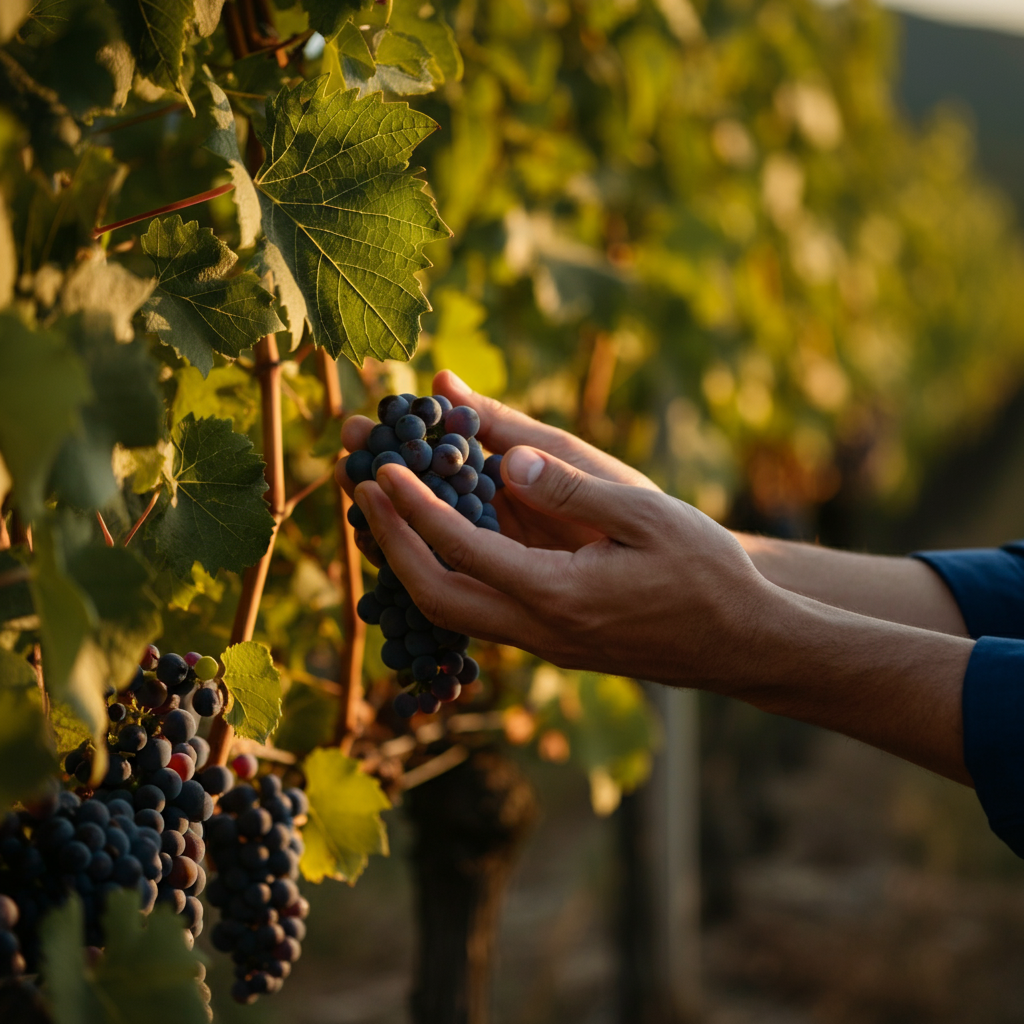
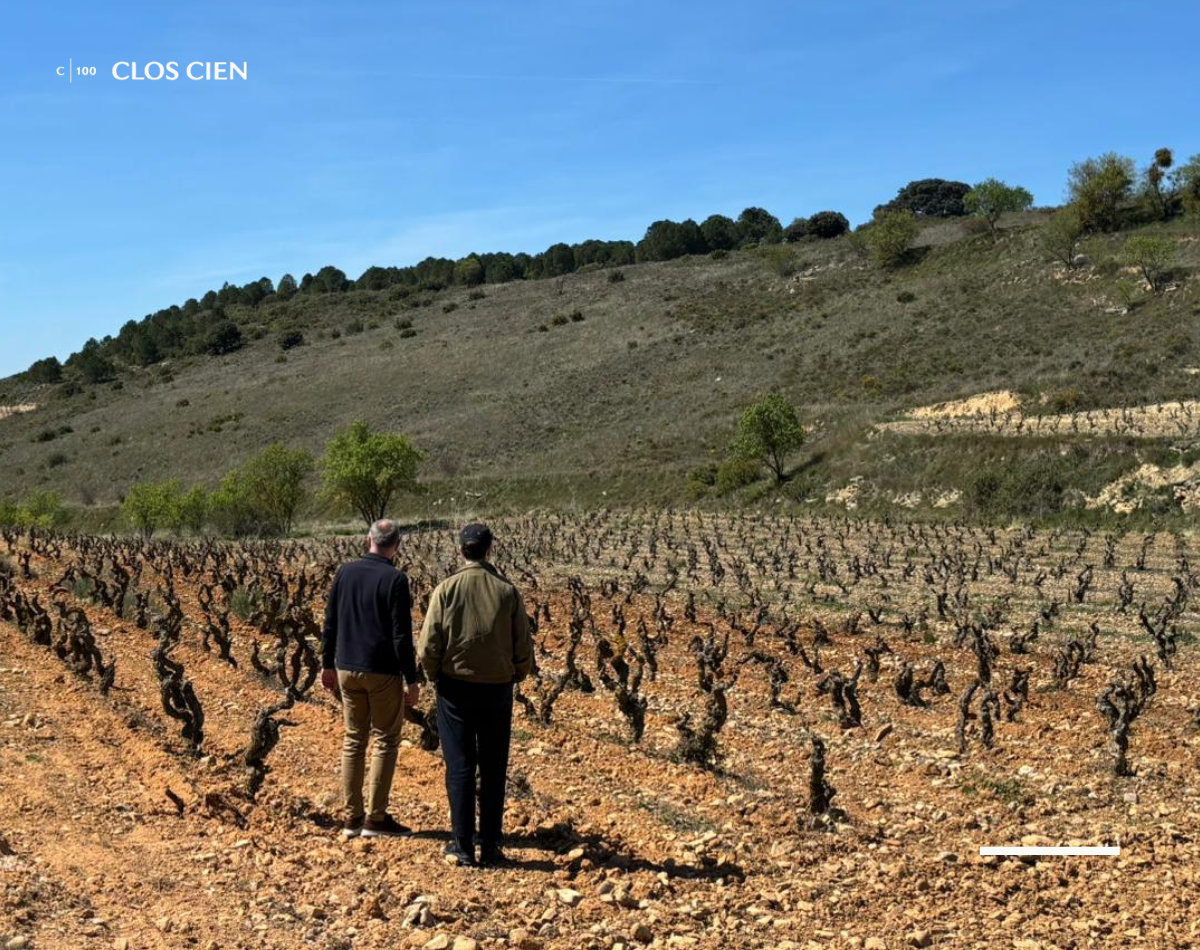
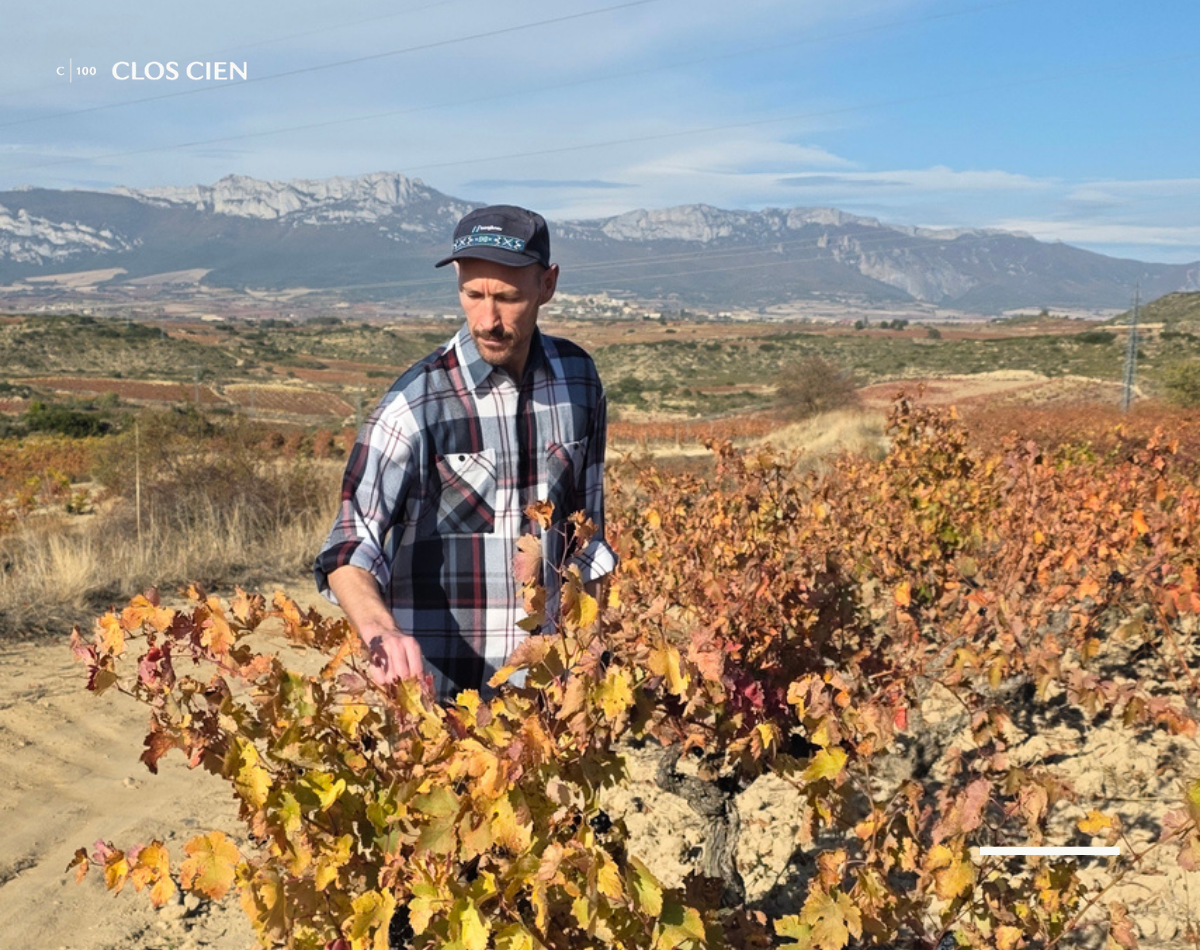
People ask us some version of this question every week. How do you actually own a vineyard in Spain. Is it really possible to own part of a vineyard without buying an entire estate. What does fractional vineyard ownership even mean.
So here it is, straight, in one place.
What is fractional vineyard ownership?
Fractional vineyard ownership means you own the usufruct rights over a specific, GPS mapped plot of vineyard land, rather than the entire estate. You get a defined piece of land, your own vines, and the wine made from your grapes each year, without taking on the running of a winery yourself.
At CLOS CIEN, that plot sits within a working vineyard in La Rioja Alavesa, cared for by a team who has spent three decades and more learning this land. You own your piece of it. They tend it.
How can I invest in or own a vineyard in Spain?
There are a few routes. You can buy an entire estate outright, which means land, buildings, equipment, and full operational responsibility. You can buy shares in a wine fund or a wine investment platform, which usually means owning bottles or a stake in a company rather than land itself. Or you can take a fractional route, owning a defined plot within an established vineyard, with the winemaking, viticulture, and paperwork handled for you.
CLOS CIEN is built around that third route. Membership gives you a mapped plot in La Rioja Alavesa, personally labelled wine made from your own vines each year, and none of the legal or agricultural weight of owning land on your own.
What’s the difference between fractional vineyard ownership and a wine club?
A wine club sends you other people’s wine. Fractional vineyard ownership gives you your own vines, on land you own the rights to, producing wine that’s yours specifically, in a quantity tied to the size of your plot. It’s the difference between subscribing to something and actually owning a piece of where it comes from.
Can vineyard ownership be given as a gift?
Yes. A CLOS CIEN membership can be gifted, and it’s become one of the more unusual and memorable gifts people give each other, particularly for milestone birthdays, anniversaries, or retirements. Unlike a bottle of wine or a wine club subscription, it’s a piece of land with your name attached to it and a bottle that carries on being made every year.
What does it actually cost to own part of a vineyard?
CLOS CIEN offers two membership tiers. ORIGIN gives you a 500m² plot. ESTATE gives you a 2,000m² plot. Both come with your own GPS mapped vines and your own annual harvest of personally labelled wine. Exact pricing and what’s included is covered in a private consultation, which usually starts with a tasting.
Is this the same as buying investment grade wine?
No. Investment grade wine means buying bottles to hold and potentially resell, usually through a merchant or a platform, with no connection to where the wine came from. Fractional vineyard ownership means owning the land itself, and the vines on it. One is an asset in a cellar. The other is a plot with your name on it, in a place you can walk to.
Where in Spain can I own a vineyard?
La Rioja Alavesa, in northern Spain, is CLOS CIEN’s home. It sits within Rioja, one of the world’s most established wine regions, with the added advantage of being under an hour from San Sebastián, home to one of the highest concentrations of Michelin starred restaurants anywhere. For anyone weighing up a second home or a standing reason to return to Spain each year, it’s hard to beat.
How do I get started?
The path in starts with a tasting, not a contract. Come taste the wine, meet the team, see the land. From there, if it’s a fit, we’ll walk you through the plots available and what ownership actually looks like day to day.
Curious what your own plot in La Rioja could look like? Join a tasting and see it for yourself.
Old Vines, Old Debate… And Why Rioja Has Already Answered It
A response from CLOS CIEN, Rioja Alavesa
The conversation around old-vine wine has been simmering for years, and pieces like this one are doing important work in bringing it to a wider audience. The science is accumulating and the consumer curiosity is there. What has been missing, until relatively recently, is a regulatory framework with enough teeth to give “old vine” real meaning beyond the marketing department.
In Rioja, that framework now exists. And it changes the terms of the debate considerably.
How Rioja Made Old Vines Legally Meaningful
In 2017, DOCa Rioja did exactly that, formally approving the Viñedo Singular designation and implementing it from 2019 onwards. It is worth understanding what that classification actually demands, because it goes considerably further than a minimum vine age.
What Viñedo Singular Actually Demands
Requirement
Standard
Minimum Vine Age
35+ years
Harvest Method
Exclusively by hand
Yield Limit
Max 5,000 kg/ha (Red)
Tasting Panel
Two blind tastings (must be “Excellent”)
Exclusivity
10 uninterrupted years of use
The EU formally approved Viñedo Singular as a geographical indication in 2026. As of mid-2023, 148 Viñedo Singular sites covering approximately 246 hectares had been officially recognised across Rioja, owned by 90 different wineries. This is not a commercial category. It is an acknowledgement that certain parcels of land, worked by certain vines over decades, produce something categorically different.
From Oak-First to Terroir-First: The 2018 Reform
The Viñedo Singular classification grew out of a long-running debate within Rioja about the primacy of terroir over oak ageing as a quality marker. The 2018 reform moved Rioja from being focused primarily on ageing and oaking to a more all-encompassing system inspecting the terroir of the wine. Viñedo Singular sits at the apex of that shift.
Why This Matters at CLOS CIEN
At CLOS CIEN, this is not an abstract policy discussion. It is the foundation of everything we do. We operate within the Rioja Alavesa subzone, where calcareous clay soils over limestone bedrock produce wines of distinctive acidity and definition. Every vineyard in our portfolio sits between 35 and 100 years old. That is not a marketing position. It is a strict operational parameter.
What an Old Vine Actually Records
When a member of ours stands in a vineyard in Samaniego, El Villar or Laguardia and looks at vines planted sixty or seventy years ago, they are not looking at an agricultural asset. They are looking at a living record of decisions made by the people who farmed that land before them. Those decisions accumulated over decades into the soil chemistry, the root depth, and the natural yield regulation. That is not just quality. That is resilience.
The Market Gap That Remains
What remains true is that the market has not yet fully priced in the difference. A wine from 80-year-old Tempranillo vines in Rioja Alavesa may not command the same premium as a grand cru Burgundy made from vines of comparable age. That gap is narrowing, and for those paying attention, Rioja’s old-vine story is one of the most compelling undervalued narratives in the fine wine world today.
CLOS CIEN is a fractional vineyard ownership and premium winemaking platform based in Rioja Alavesa, DOCa Rioja. Members create their own fine wines from old-vine parcels with a minimum age of 35 years. For further information, visit closcien.com
Ask Ali what a typical day looks like and he will pause, then smile. “A typical day I’m not sure I have one.” It is not evasion. It is simply the truth of what it means to be the operational and commercial heartbeat of CLOS CIEN, a membership unlike anything else in the wine world.
On any given morning, Ali might be reviewing contracts for a new member joining at the Estate tier double-checking the logistics of their onboarding, making sure the transition from prospect to owner is seamless. By afternoon, he’s liaising with a long-standing member about the label design for their private bottling, calling on two decades of freelance design experience to translate someone’s vision into something they’ll hold in their hands years from now. By evening, he might be fielding questions about vineyard conditions, harvest timelines, or simply how the wine is evolving.
“Every case is different,” he says. “Different tiers, different expectations, different people. The job is making sure each of them feels like the only one.”
The Quiet Promise
There is something about CLOS CIEN that prospective members consistently underestimate I think, Ali says. It is not the wine, which speaks for itself. It is not the land, which Ignacio del Campo has spent years understanding. It is the team working quietly in the background: the winemakers, the agronomists, the people whose expertise means that members never have to worry about any of it.
“This is exactly how we want it,” he says. “Under the radar. Things just work. That’s the promise we make at the start of every journey. Vineyard ownership without any hassle.”
The wine world is saturated with investment propositions. CLOS CIEN is not trying to be one of them. “This is not you on your own, running a vineyard and managing every aspect of it,” Ali explains. “You have a real asset. You have physical wine that we can help you commercialise. But above all, we’re giving people an alternative asset nestled inside a genuinely unique experience.”
Keeping the Relationship Alive
Vineyard membership is, by nature, a long-distance relationship for most of the year. Members are in London, Geneva, Dubai, or New York while their vines are in Rioja. Ali thinks carefully about how to keep that connection real.
“We keep members up to date through educational pieces and personal insights from their own particular journey. Images, video, whatever brings the vineyard to life from wherever they are. And we’re available at any time to answer questions. About anything really.”
A membership portal is in development. A single, always-on hub where every update, document, and milestone will live. But for Ali, technology is only the infrastructure. The foundation is something more fundamental: transparency.
“One of our core philosophies is transparency. And that’s the way it will always be. We’re proud of that.”
The Moment It Becomes Real
Asked what has made him most proud, Ali does not reach for a metric or a milestone. He reaches for a feeling.
“The first visit over to the bodega. Meeting real people who had taken this on and believed in the project. It’s all good having a concept on paper, but when someone buys into your vision and is willing to join you that’s always a proud moment, beyond words.”
And then there is the second moment. The one that happens for every member, at every visit. The moment the concept becomes physical. The working bodega. The rows of vines. The realisation that it is not a promise anymore it is happening.
“It’s always there — that twinkle of excitement. Every time.”
CLOS CIEN membership is open to a limited number of founding members. To learn more, get in touch with Ali directly.
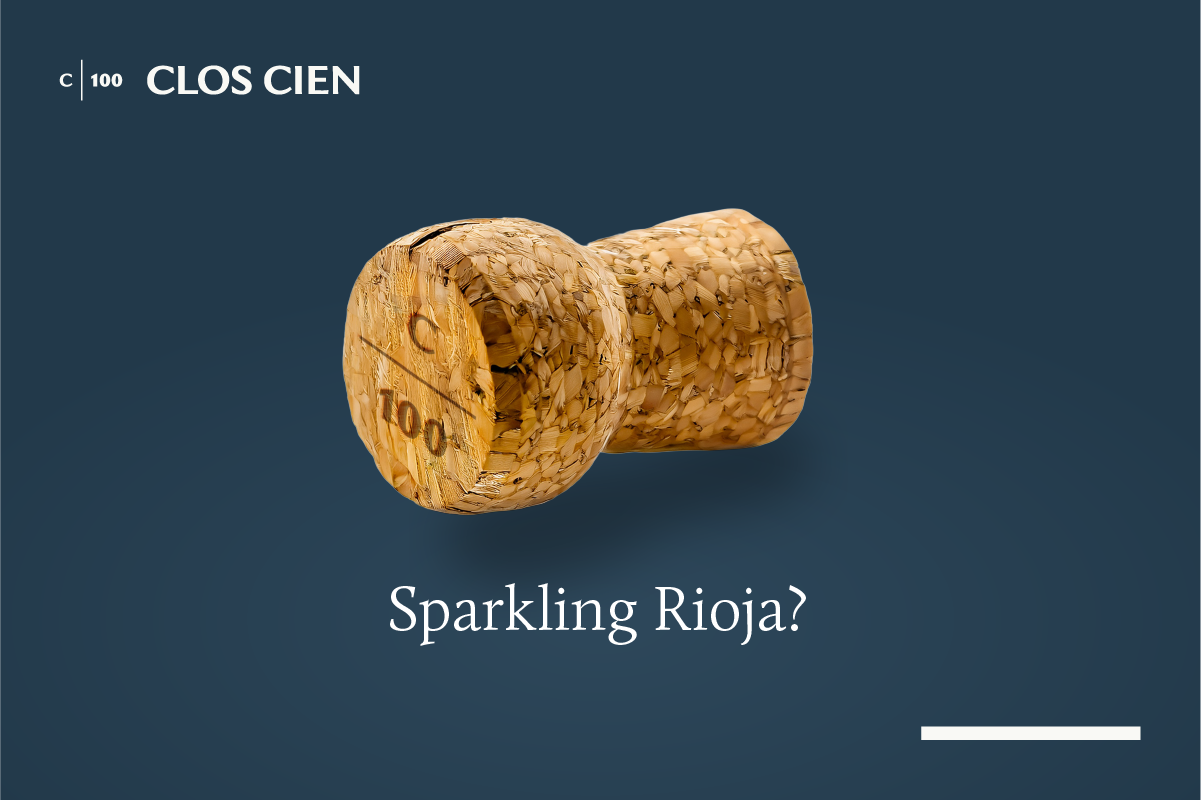
When you think of Rioja, sparkling wine probably isn’t the first thing that comes to mind. For over a century, this region built its reputation on aged reds – Tempranillo-based wines that spend years in American oak barrels before release. Around 93% of Rioja’s plantings are red grapes. Sparkling wine? That was Cava’s territory, or Champagne’s domain.
Then in 2017, the Consejo Regulador made it official. They created a new category called “Espumosos de Calidad de Rioja” – quality sparkling wines from Rioja. Within this designation sits Gran Añada, which requires the wines to age on their lees for at least 36 months. The same requirement as vintage Champagne.
This wasn’t a complete surprise to everyone. Some Rioja producers had been making sparkling wines for decades, even over a century in a few cases. Parts of Rioja have long been authorized to produce Cava under Spain’s broader sparkling wine denomination. But this was different – these were distinctly Riojan sparklers with their own identity and regulations.
What makes Rioja sparklers different
The method is the same as Champagne and Cava – traditional method, or “método tradicional” in Spanish. The second fermentation happens in the bottle, creating those fine, persistent bubbles. The wines must be hand-harvested (for vintage Gran Añada), undergo second fermentation in bottle, and age on their lees for extended periods. Minimum 15 months for the basic category, 24 months for Reserva, and 36 months for Gran Añada.
But here’s where it gets interesting: the grapes are different. Champagne uses Chardonnay, Pinot Noir, and Pinot Meunier. Cava traditionally relies on Macabeo, Parellada, and Xarel·lo – three white varieties you’ve probably never heard of unless you’re deep into Spanish wine.
Rioja uses its own varieties. All the authorized red and white grapes from the region are permitted: Viura (the workhorse white), Tempranillo Blanco (that 1988 mutation), Malvasía, Garnacha Blanca, even Chardonnay and Sauvignon Blanc in the mix. For rosé sparklers, at least 25% must be red grapes – Tempranillo, Garnacha, Graciano, Mazuelo, or Maturana Tinta.
This means sparkling Rioja can taste radically different from Champagne or Cava. Some producers make blanc de blancs styles from pure Viura. Others blend multiple varieties. There are even experimental versions using the nearly-extinct indigenous grapes. The toasty, brioche-like notes from lees aging combine with the fresh fruit character of Rioja’s grapes – citrus, green apple, stone fruit, sometimes hazelnut or dried Mediterranean herbs.
The alcohol must sit between 11-13%, keeping things refreshing. Sweetness levels follow the same categories as Champagne: Brut Nature (0-3 g/l sugar), Extra Brut (0-6 g/l), and Brut (0-12 g/l). Most producers aim for Brut or Extra Brut – dry, food-friendly styles.
Why is this surprising?
Rioja’s entire identity revolves around aging. The region’s classification system – Crianza, Reserva, Gran Reserva – is based on how long wines spend in oak barrels and bottles before release. Some Gran Reservas aren’t released for a decade after harvest. The famous producers hold massive barrel inventories. It’s a region that celebrates patience and tradition.
Sparkling wine works differently. It’s about freshness, precision, and immediate appeal. The base wines are kept neutral – low alcohol, high acidity, minimal oak influence. Then comes the magic of bottle fermentation and lees aging. It’s a completely different mindset from making age-worthy reds.
The surprise is that Rioja, famous for doing one thing extraordinarily well, officially embraced something entirely different. And they didn’t just dabble – they created serious regulations, requiring the same extended aging as vintage Champagne for their top tier.
It signals something important: Rioja isn’t stuck in amber. The region that defined Spanish wine through tradition is now exploring what else its grapes and terroir can do.
How does it compare?
Against Champagne: More affordable (significantly), different fruit profile (Mediterranean versus northern French), often less acidic but with similar complexity from lees aging. Champagne’s cool climate creates wines with razor-sharp acidity and austere fruit. Rioja’s warmer conditions produce riper fruit flavors while still maintaining freshness.
Against Cava: Similar traditional method production, but completely different grapes and terroir. Cava comes primarily from Catalonia’s Penedès region (though it’s produced in other Spanish regions too). The Mediterranean climate is shared, but the grape varieties give Cava its distinctive profile – often crisper, with green apple and almond notes. Sparkling Rioja shows more diversity because it can use the region’s full palette of varieties.
The real difference? Sparkling Rioja can use Tempranillo – Spain’s most famous red grape – in the blend for rosé versions. This gives some sparklers a character you won’t find anywhere else. Imagine the structure of Tempranillo translated into bubbles.
The current reality
Sparkling Rioja remains tiny – a fraction of the region’s production. Most producers still focus on what made them famous: age-worthy reds. But interest is growing. The first single-vineyard sparkling Viñedo Singular was recently approved, combining two of Rioja’s new classifications in one bottle.
These aren’t wines trying to be Champagne or compete with Cava on price. They’re distinctly Riojan, carrying the region’s personality – its grapes, its terroir, its commitment to quality – into a completely different format. That’s what makes them worth paying attention to.
Own a Piece of a Spanish Vineyard: Fractional Ownership Made Simple
From 500m² to 2 hectares in La Rioja. Legal title to your land. Professional winemaking. Premium wine from your vines.
Schedule a Consultation
WHAT IS FRACTIONAL VINEYARD OWNERSHIP?
Fractional vineyard ownership gives you membership rights to a specific plot of premium La Rioja vineyard without the complexity of traditional ownership. You receive vineyard allocation rights, annual wine production from your vines, and complete professional stewardship. This is a genuine vineyard membership with dedicated plot allocation, not a wine club or investment fund.
Unlike wine investment platforms that offer exposure to wine values through fund shares, CLOS CIEN provides actual vineyard allocation rights in La Rioja, Spain’s premier wine region, located just 1 hour from Bilbao. You have a dedicated plot producing wine exclusively for you each harvest. Learn more about how vineyard stewardship works.
How It Works:
• Choose your vineyard size in La Rioja (500m², 2,000m², or 2 hectares)
• Receive vineyard allocation rights with dedicated plot assignment
• Professional team manages all La Rioja viticulture and winemaking
• Receive premium Rioja wine from your vines annually
Perfect For:
• Wine enthusiasts seeking authentic La Rioja vineyard experience
• Families building generational legacy through Spanish wine assets
• Businesses wanting premium La Rioja wine for client entertainment
• Investors seeking alternative assets in Spain’s premier wine region
WHY CHOOSE CLOS CIEN?
30 Years La Rioja Expertise
Founder Brian Thompson has spent three decades building relationships across La Rioja’s top estates. His deep regional knowledge of Spanish wine terroir ensures members access premium La Rioja vineyard plots and world-class winemaking resources.
World’s Best Sommelier Guidance
Miguel Ángel Millán, crowned World’s Best Sommelier in 2023, guides members through tasting workshops and blending decisions. His expertise helps you create wines reflecting your personal preferences while maintaining La Rioja quality standards.
Zero Complexity Model
Traditional vineyard ownership requires €2M+ capital, full-time management, and deep winemaking knowledge. CLOS CIEN eliminates these barriers. Our stewardship model handles all technical aspects while preserving your genuine ownership rights and decision-making power.
Premium La Rioja Location
La Rioja produces Spain’s most prestigious wines with 100+ year aging potential. The region, located just 1 hour from Bilbao, offers 18 Michelin stars within 90 minutes, UNESCO World Heritage sites, and direct flights from major European cities. Your vineyard sits in La Rioja, one of the world’s great wine regions producing exceptional tempranillo and Rioja blends.
100% Visitor Conversion
Every person who visits the vineyard becomes a member. This perfect conversion rate speaks to the quality of the experience and the authenticity of the ownership model.
HOW IT WORKS: YOUR PATH TO OWNERSHIP
Step 1: Initial Consultation
Book a consultation to discuss your goals and preferences. We’ll explain the ownership structure, walk through available plots, and answer your questions about the process.
Step 2: Vineyard Selection
Choose from available plots across La Rioja’s premium wine regions. Each vineyard is mapped, soil-tested, and assessed for quality. We provide complete transparency about terroir characteristics and production potential.
Step 3: Membership Agreement
Receive vineyard allocation rights with dedicated plot assignment. This is genuine vineyard membership with full allocation rights, not a membership certificate or fund share.
Step 4: Welcome & Orientation
Meet the winemaking team, visit your vineyard, and begin your first tasting session with Miguel Ángel Millán. You’ll learn about your vines, the winemaking process, and how to shape your wine’s style.
Step 5: Annual Wine Production
Each harvest produces wine exclusively from your vineyard. Bottles are labeled with your plot designation. The wine is yours to drink, gift, age, or sell. You decide.
MEMBERSHIP TIERS & COMPARISON
Feature
ORIGIN €5,000
ESTATE €19,000
SINGULAR €170,000
Vineyard Size
500m²
2,000m²
2 hectares
Annual Bottles
132 bottles
528 bottles
5,280 bottles
Ownership Rights
✓
✓
✓
Stewardship
Included
Included
Included
Best For
Wine enthusiasts
Families & businesses
Commercial investors
All tiers include professional viticulture and winemaking, tasting workshops with Miguel Ángel Millán, members’ lodge access, harvest participation, and University of La Rioja education programs. Explore each membership in detail:
Your membership investment covers La Rioja vineyard allocation and lifetime stewardship. There are no ongoing management fees. Premium La Rioja vineyards have appreciated 100%+ since 2014. Your annual wine allocation has retail value ranging from €3,960 to €158,400+ depending on tier.
How This Differs from Wine Investment Platforms
Digital platforms like Vinovest and Cult Wine charge 1.9% to 2.75% annually. Over 10 years on a €100,000 investment, you pay €25,000 to €28,000 in fees. CLOS CIEN includes all stewardship in your initial membership with zero ongoing costs. You get actual vineyard allocation rights in La Rioja, not fund shares.
Wine investment platforms offer financial exposure to wine markets. CLOS CIEN offers genuine Spanish vineyard membership with dedicated plot allocation, hands-on winemaking participation, and La Rioja lifestyle experiences that digital platforms cannot provide. Read our complete analysis: Wine investment platforms vs physical vineyard ownership.
Lifestyle Value Beyond Returns
• Visit your La Rioja vineyard anytime (unlimited access to members’ lodge)
• Participate in harvest and winemaking decisions for your Rioja wine
• Access 18 Michelin stars within 90 minutes of your vineyard
• Explore La Rioja wine region, 1 hour from Bilbao
• Create family legacy through Spanish wine and vineyard assets
FREQUENTLY ASKED QUESTIONS
What exactly do I own?
You own a Club membership that gives you rights to a dedicated plot of premium La Rioja vineyard and a fixed annual quantity of wine made to your preferences. Unlike traditional vineyard ownership with its legal, tax, and operational complexities, CLOS CIEN offers all the benefits (exclusivity, decision-making power, transferability, and legacy potential) without the burdens. Your vineyard allocation is fully personal, transferable, and inheritable during your membership. No capital calls, no hidden liabilities.
What are the payment terms?
One-off initiation fee is due in full within 15 days of signing your membership contract. Annual dues are payable between November 1st and 15th each year. Members may choose a monthly payment plan, subject to a 5% monthly convenience fee.
What’s included in my membership?
Your membership includes your personal boutique vineyard in La Rioja for the duration of your membership (including yearly maintenance and replanting when needed), guaranteed annual wine production (132 bottles for ORIGIN, 528 bottles for ESTATE, 5,280 bottles for SINGULAR), access to premium winemaking facilities and social spaces by reservation, and expert guidance throughout your winemaking journey.
Are there ongoing fees?
Annual dues cover production costs, facility access, vineyard and winery activities, and two years of aging and storage. The Winter Ball Dinner and Harvest Festival celebrations are included in your annual dues. When your bottles are ready for shipment, you’ll be notified. Should you wish to age them further in the cellars, a nominal storage fee would apply.
Can I sell my membership?
Yes. Membership is transferable through CLOS CIEN via resignation of the membership and reissuance, minus a transfer fee of 15% of the current initiation fee. The initiation fee is refundable only through Club-managed membership transfer procedures.
What if I miss a payment?
A 5% monthly interest charge applies to late payments. Members have up to 60 days to bring their account current. Non-payment beyond this period may result in membership cancellation.
Can I pass my membership to my children?
Yes. Upon the death of a member, the membership can be transferred to his or her spouse or, one time, to an immediate family member, subject to the terms of the Membership Plan.
NEXT STEPS
Membership is limited across 100 hectares. Once allocated, these vineyards will not become available again.
Schedule a Consultation
TRUST & CREDIBILITY
✓ Featured in Celebre Magazine
✓ Guided by World’s Best Sommelier 2023 (Miguel Ángel Millán)
✓ 30 years La Rioja experience (Founder Brian Thompson)
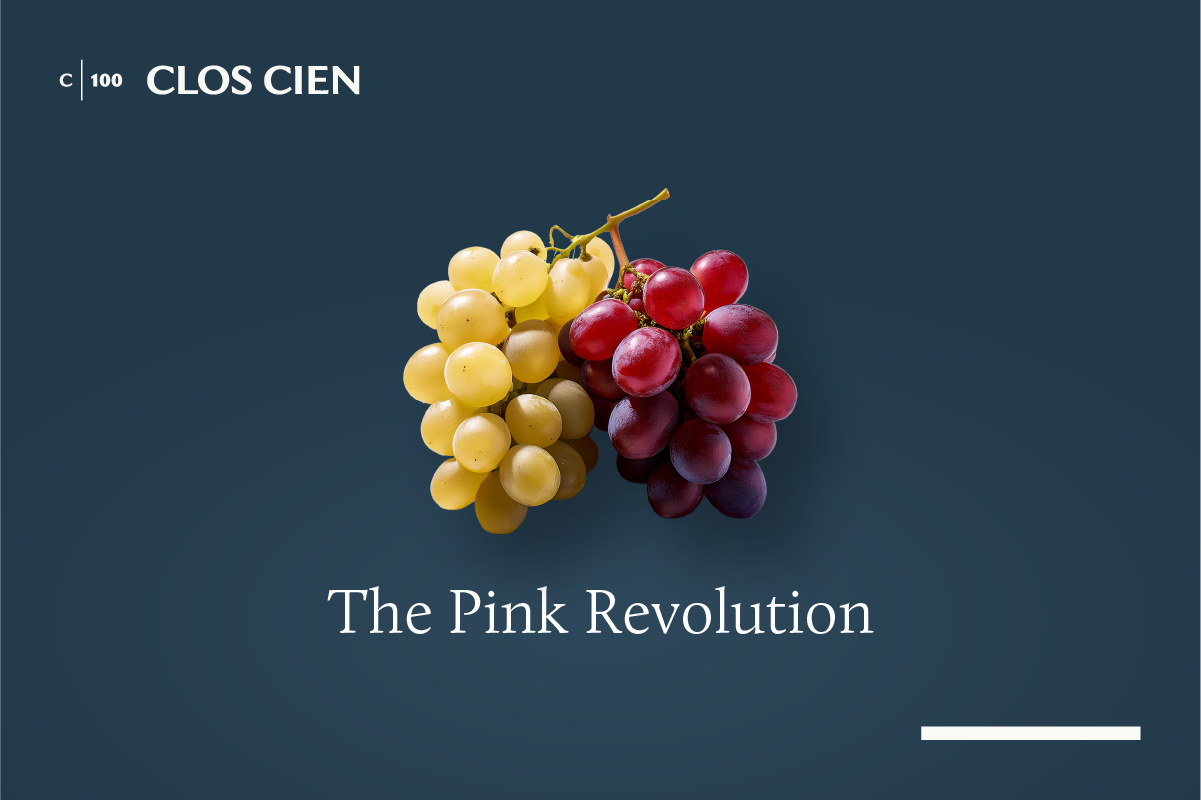
Rioja has a long tradition of making pink wines, though the style has evolved dramatically. The original version was called clarete – a field blend of red and white grapes with one to two days of maceration. These could range from dark pink to pale red depending on the vintage and the percentage of red and white grapes used.
Under current regulations, rosado wines must contain at least 25% of red grapes (Tempranillo, Garnacha, Graciano, Mazuelo, or Maturana Tinta). They can include white varieties like Chardonnay, Sauvignon Blanc, or Verdejo, but these cannot be the predominant variety in the blend.
Modern Rioja rosados often use the sangrado (saignée) technique. This “bleeding off” of juice from red wine tanks results in deeper-colored, richer wines with pronounced strawberry and citrus notes.
There’s a growing movement toward terroir-driven rosados. Producers are increasingly sourcing grapes from specific sites rather than blending from across the region. High-altitude vineyards (500 meters and above) are particularly sought after for rosado production, as the cooler temperatures help retain freshness and acidity.
Climate change is making these higher-altitude sites more viable. The highest Rioja vineyards reach around 750-800 meters, where cooler conditions create wines with bright acidity and elegant fruit profiles.os
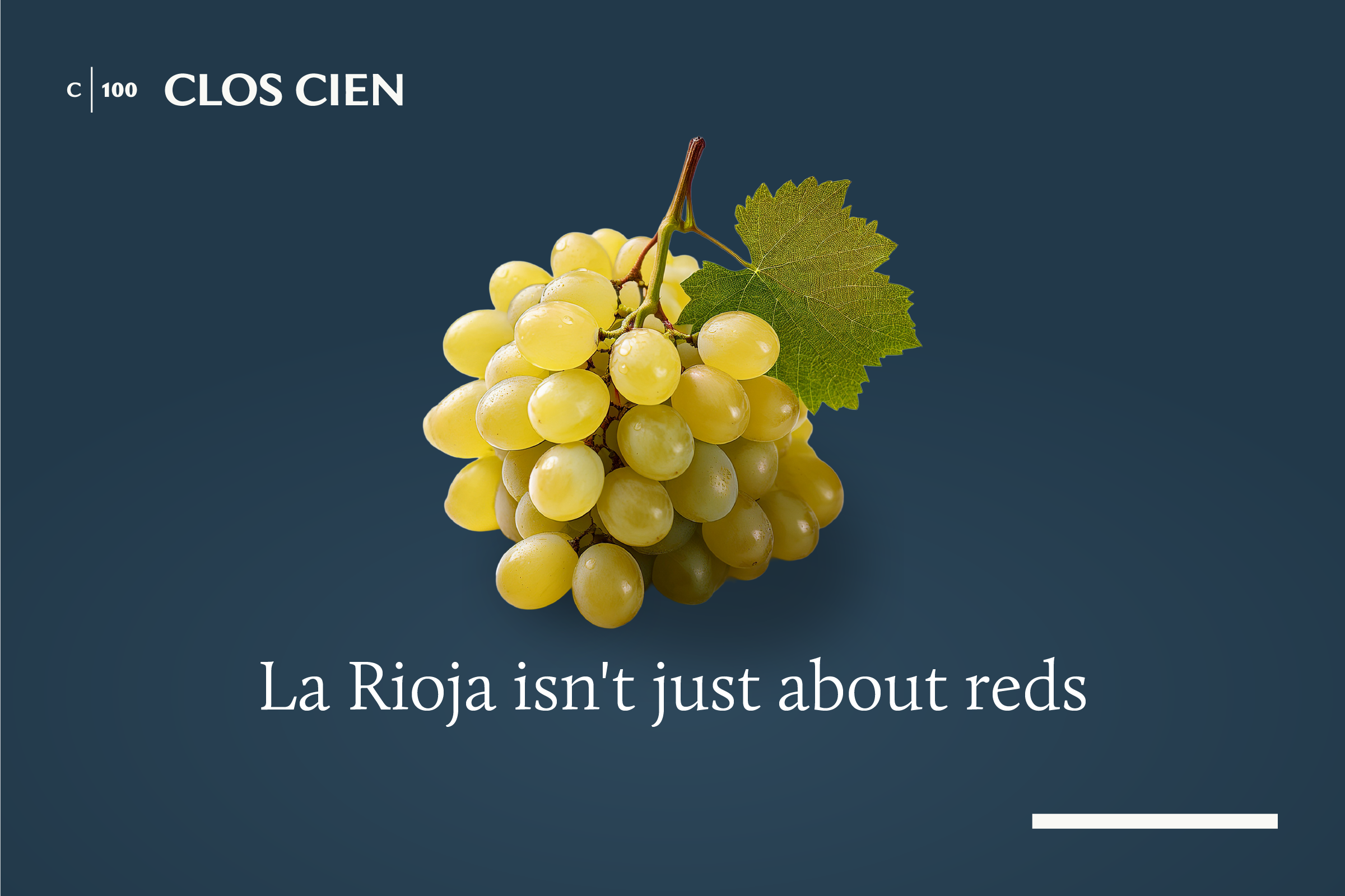
Viura accounts for around 69% of white grape plantings in Rioja. It’s also called Macabeo in most of Spain and has been the dominant white variety in the region since the 1970s.
Viura is vigorous and makes versatile, food-friendly wines with subtle citrus and green apple notes and moderate acidity. The vine undergoes bud break later than many varieties, which helps protect it from spring frosts, though it tends to overproduce. Nearly half of Rioja’s Viura vines are more than 40 years old.
But Rioja has been bringing back native white varieties. Tempranillo Blanco comes from a natural genetic mutation discovered in 1988 in a single cane of a red Tempranillo vine in an old vineyard in Murillo de Río Leza. It now makes up around 12% of white plantings. It has fruity, intense aromas of bananas, citrus fruit and tropical fruit.
Maturana Blanca is the oldest grape variety to have a written record in Rioja, being mentioned in a text dating to 1622. It accounts for less than 1% of white plantings. Maturana Blanca wines are greenish yellow, with fruity aromas of apples underscored by grassy notes. It’s exclusive to Rioja.
Modern additions include Verdejo at around 5%, Chardonnay at around 2%, and Sauvignon Blanc at around 3%. These foreign white varieties cannot be the predominant variety in the final composition of the wine.
White Rioja can be fresh and young or aged in oak for years, developing complexity that rivals great white Burgundy.
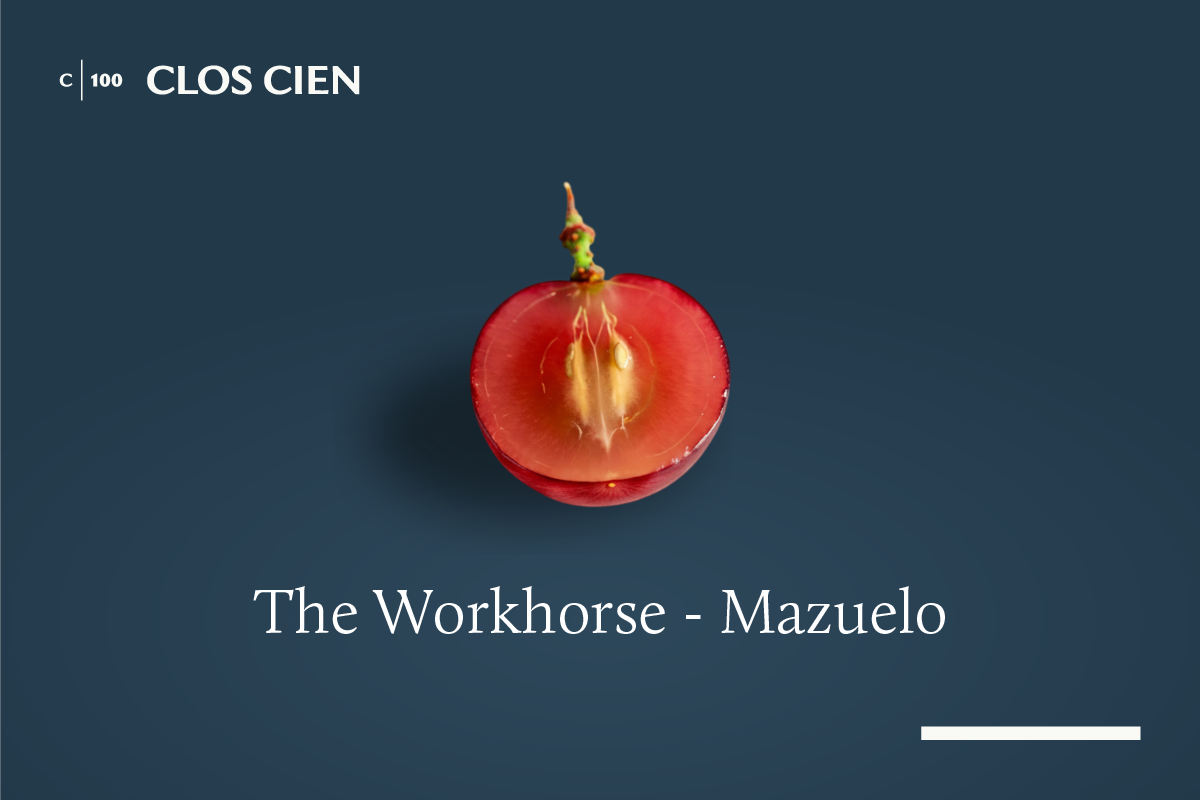
Mazuelo makes up around 2% of La Rioja’s red grape plantings. In most of the wine world, this grape is called Carignan or Cariñena, but in Rioja it goes by Mazuelo.
Tempranillo-heavy wines from Rioja sometimes include small amounts of Mazuelo to add acidity, color and tannin. The grape has high tannins, high acidity and is relatively full-bodied.
That toughness is exactly why blenders want it. In less fertile areas, with good soils, old vines and limited production, quality wines can be obtained. Mazuelo needs higher heat to ripen, with late budding and mid-season to late ripening. It’s particularly sensitive to powdery mildew.
Outside of Catalonia (where it’s more common as Cariñena), Mazuelo is mostly a secondary blending variety in Rioja, though a few producers, such as Marqués de Murrieta, do make varietal examples.
Most drinkers will never taste a 100% Mazuelo wine. But in every Gran Reserva where it appears, even in small amounts, it’s doing the structural work that allows those wines to age for decades.
Focused on specific wine regions and local wine scenes
Pour Temecula
Hosted by: Rick DeLucio & Shannon Cole Synopsis: Temecula and Southern California’s only podcast devoted to the local wine, beer, and beverage scene. Episodes: 20 | Started: 2025 | Country: United States Status: Active
Texas Under Vine
Hosted by: Scott Hall Synopsis: Exploring the many vineyards, wine businesses, and wine information found in the great state of Texas. Episodes: 70 | Started: 2022 | Country: United States Status: Active
The Zonda Wine Podcast
Hosted by: Shawn Zylberberg Synopsis: The Zonda Wine Podcast brings entertainment to the world of wine with monthly episodes featuring the most influential voices in the industry—glassmakers, sommeliers, critics, Masters of Wine, and more. Episodes: 5 | Started: 2025 | Country: United States Status: Active
Indie Wine Podcast
Hosted by: Matt Wood Synopsis: In depth interviews of smaller California producers and detailed episodes on California wine history. Episodes: 85 | Started: 2023 | Country: United States Status: Active
We Know Texas Vino
Hosted by: Will Donohue & Michel Woods Synopsis: Podcast about Texas Wineries and Vineyards and education of wine. Episodes: 120 | Started: 2023 | Country: United States Status: Active
Cork Talk
Hosted by: Tim Atkin Synopsis: All things NC wine, mead, cider and more! Episodes: 100 | Started: 2018 | Country: United States Status: Active
Where Wine Takes You
Hosted by: Adam Montiel Synopsis: Each episode is an intimate journey with owners, winemakers, growers, and personalities as they discuss the places and wines that have shaped the Paso Robles wine region. Episodes: 140 | Started: 2020 | Country: United States Status: Active
On The Wine Road Podcast
Hosted by: Jeff Davis Synopsis: Jeff Davis travels throughout California and reaches across the globe to share the stories of the fascinating people who craft the wine we love. Episodes: 195 | Started: 2014 | Country: United States Status: Active
The Wine Show Australia
Hosted by: Simon Nash, Jill Upton & Sam Isherwood Synopsis: Simon Nash, Jill Upton and Sam Isherwood interview wine industry personalities and uncover their stories and amazing tales from Australia. Episodes: 892 | Started: 2017 | Country: Australia Status: Active
NZ Wine Podcast
Hosted by: Boris Lamont Synopsis: The place to hear great stories from New Zealand winemakers, vineyards owners and others in the industry. Episodes: 97 | Started: 2017 | Country: New Zealand Status: Active
UK Wine Show
Hosted by: Chris Scott & Jane Scott Synopsis: Chris Scott and the UK Wine Show is a weekly podcast, exploring the wine scene here in the UK and around the world. Interviews with winemakers, producers, critics, wine bar owners. Almost all the good wine from around the world washes up on these shores. Episodes: 822 | Started: 2006 | Country: United Kingdom Status: Active
Wine, Food & Travel with Marc Millon
Hosted by: Marc Millon Synopsis: Discover the world of Italian wines, food, culture and travel with award-winning writer and podcaster Marc Millon. Episodes: 210 | Started: 2016 | Country: United Kingdom
On the Road Edition
Hosted by: Stevie Kim Synopsis: Stevie Kim’s irregular-schedule spin-off of the Italian Wine Podcast takes listeners on 10–20 minute audio field trips to Italy’s top wine regions, combining on-location interviews with vineyard owners, tasting notes, and travel insights. Episodes: 188 | Started: 2018 | Country: Italy Status: Active
The Spanish Wine Experience
Hosted by: Luke Darracott & Roque Madrid Synopsis: A fun and boozy journey through Spain and its wines. Episodes: 191 | Started: 2017 | Country: Spain Status: Active
Drinks Adventures
Hosted by: James Atikinson Synopsis: Wine lover? Craft beer fan? Based in Australia, but globally minded, Drinks Adventures covers all these drinks and more. Episodes: 266 | Started: 2018 | Country: Australia Status: Active
The English Wine Diaries
Hosted by: Rebecca Pitcairn Synopsis: From sommeliers to vineyard owners, hoteliers and celebs, discover how a love of wine – particularly that made on British soil – has helped shape guests lives and careers. Episodes: 95 | Started: 2021 | Country: United Kingdom Status: Active
This is Texas Wine
Hosted by: Shelly Wilfong Synopsis: Host Shelly Wilfong provides Texas-specific education, information on industry trends, legislative developments, and other important topics that impact the Texas wine industry. Episodes: 103 | Started: 2020 | Country: United States Status: Active
Wine Road Podcast – The wine when and where of Sonoma County
Hosted by: Marcy Gordon & Beth Costa Synopsis: Meet winemakers and winery owners and get the inside scoop from Sonoma County, CA. Episodes: 242 | Started: 2016 | Country: United States Status: Active
Wine Road’s The Wine, When & Where
Hosted by: Marcy Gordon & Beth Costa Synopsis: The Wine Road provides the Wine, When and Where of Northern Sonoma to locals and visitors with tips and news on events, wineries, restaurants, outdoor activities, and places to stay. Episodes: 233 | Started: 2016 | Country: United States Status: Active
ON THE ROAD with MR CA WINE
Hosted by: Chuck Cramer Synopsis: This podcast will take you ON THE ROAD, on a wine journey with cool guests ranging from experts who work in the business of wine and mates who simply love wine. Episodes: 230 | Started: 2020 | Country: United States Status: Active
The Wine Makers
Hosted by: Bart Hansen, Sam Coturri & Brian Casey Synopsis: Everything about the wine business that you want to know and learn about the winemakers you haven’t heard about before. Episodes: 378 | Started: 2017 | Country: United States Status: Active
Wine Soundtrack USA
Hosted by: Allison Levine Synopsis: WineSoundtrack is the international podcast that tells the story of wine through the voices of its key players: winemakers, oenologists, and entrepreneurs from around the world. Episodes: 300 | Started: 2018 | Country: United States Status: Active
Italian Wine Podcast Book Club
Hosted by: Richard Hough Synopsis: Monthly podcast series from Verona focusing on all aspects of wine writing. Episodes: 17 | Started: 2021 | Country: Italy Status: Active
For industry professionals, importers, and wine trade
Sustainable Wine
Hosted by: Hanna Halmari Synopsis: The Sustainable Wine Podcast is the official podcast of the Sustainable Wine Roundtable (SWR)—the global coalition driving sustainability in the wine industry. Episodes: 220 | Started: 2020 | Country: United Kingdom Status: Active
Asia Wine Market
Hosted by: Roza Zharmukhambetova Synopsis: Explores the rapidly expanding Asian wine industry—examining regional consumer trends, import logistics, and market entry strategies across 20–40 minute interviews with producers, importers, and educators. Episodes: 12 | Started: 2025 | Country: Italy Status: Active
Clubhouse Ambassadors’ Corner
Hosted by: Rotating Hosts Synopsis: Each episode features engaging interviews with Italian winemakers, vineyard owners, and industry professionals, moderated by certified Italian Wine Ambassadors. Episodes: 197 | Started: 2020 | Country: Italy Status: Active
Drinks Insider
Hosted by: Felicity Carter Synopsis: Podcast, newsletter and content consultancy for the drinks trade. Episodes: 39 | Started: 2024 | Country: Germany Status: Active
Business of Drinks
Hosted by: Erica Duecy & Scott Rosenbaum Synopsis: Business of Drinks goes behind the bottle, interviewing founders and CEOs of fast-growing drinks companies on what’s resonating in the marketplace right now. Episodes: 77 | Started: 2023 | Country: USA Status: Active
Wine Talks
Hosted by: Paul Kalemkiarian Synopsis: All you knew about wine is about to bust wide open….we are going to talk about what really happens in the wine business and I’m taking no prisoners… Episodes: 440 | Country: United States Status: Active
XChateau
Hosted by: Peter Yeung & Robert Vernick Synopsis: A masterclass on the business of wine: insights, analysis, and perspectives on news and trends in the wine industry beyond winemaking, such as marketing, finance, and consumer trends. Episodes: 197 | Started: 2020 | Country: United States Status: Active
The Wine CEO
Hosted by: Sarah Roth Synopsis: Each week certified sommelier Sarah Roth highlights a variety, region, or winemaker to help make wine more fun and approachable for consumers! Episodes: 200 | Started: 2020 | Country: United States Status: Active
Beyond Organic Wine
Hosted by: Adam Huss Synopsis: Deep discussions about the ecological revolution of wine. Episodes: 203 | Started: 2018 | Country: United States Status: Active
Bottled in China
Hosted by: Emilie Steckenborn Synopsis: Curious about the latest in the global wine and drink scene? Join Emilie Steckenborn on the Bottled in China Podcast for engaging conversations with thought leaders, exploring the vibrant world of beverages through an Asian lens. Episodes: 195 | Started: 2016 | Country: China Status: Active
Next Generation
Hosted by: Various Hosts Synopsis: A weekly Italian Wine Podcast series that spotlights emerging winemaking talent and cutting-edge trends in Italian wine through in-depth interviews and panel discussions. Episodes: 131 | Started: 2022 | Country: Italy Status: Active