
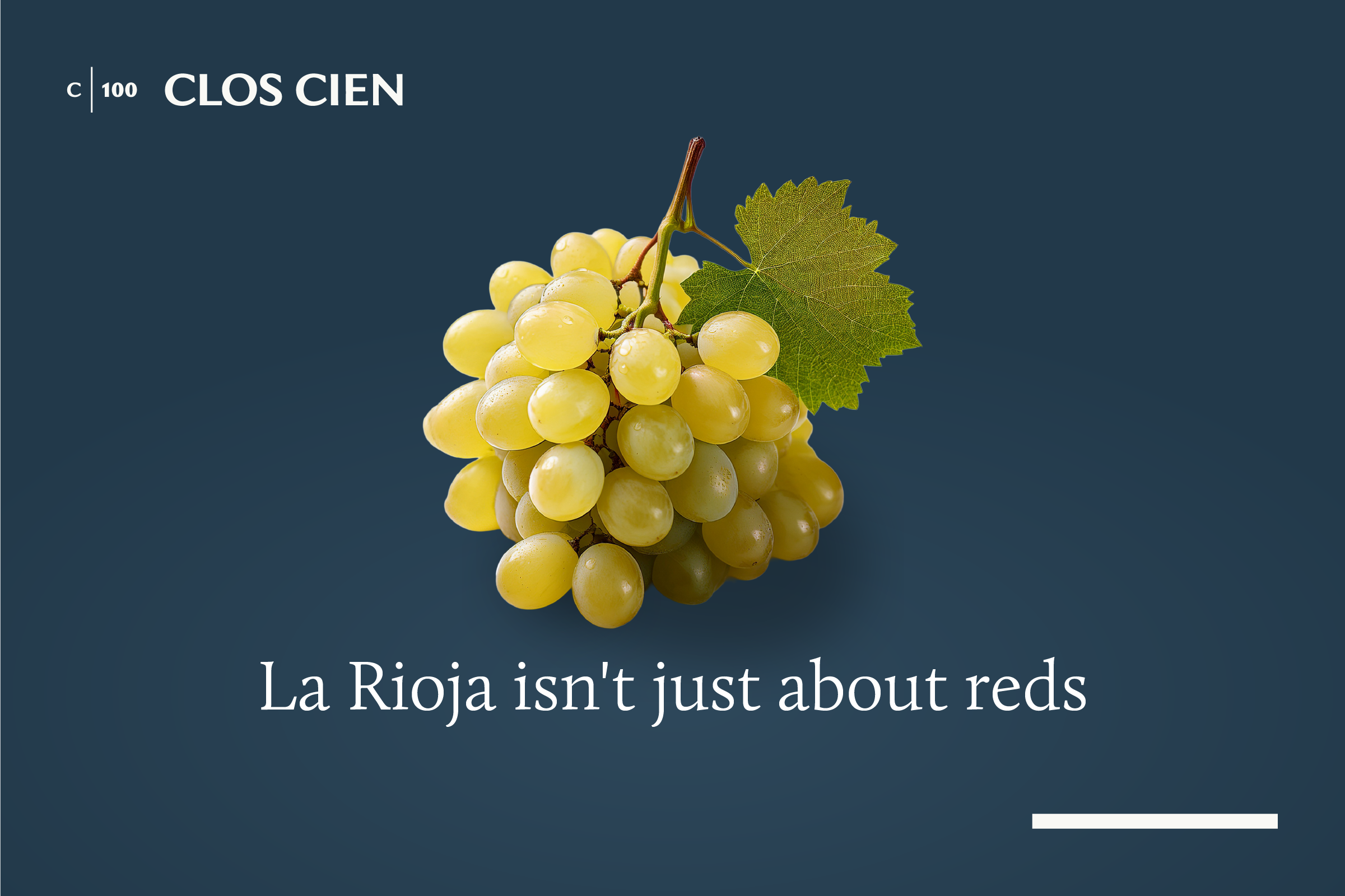
THE INNOVATORS – White Varieties
La Rioja isn’t just about reds
Viura accounts for around 69% of white grape plantings in Rioja. It’s also called Macabeo in most of Spain and has been the dominant white variety in the region since the 1970s.
Viura is vigorous and makes versatile, food-friendly wines with subtle citrus and green apple notes and moderate acidity. The vine undergoes bud break later than many varieties, which helps protect it from spring frosts, though it tends to overproduce. Nearly half of Rioja’s Viura vines are more than 40 years old.
But Rioja has been bringing back native white varieties. Tempranillo Blanco comes from a natural genetic mutation discovered in 1988 in a single cane of a red Tempranillo vine in an old vineyard in Murillo de Río Leza. It now makes up around 12% of white plantings. It has fruity, intense aromas of bananas, citrus fruit and tropical fruit.
Maturana Blanca is the oldest grape variety to have a written record in Rioja, being mentioned in a text dating to 1622. It accounts for less than 1% of white plantings. Maturana Blanca wines are greenish yellow, with fruity aromas of apples underscored by grassy notes. It’s exclusive to Rioja.
Modern additions include Verdejo at around 5%, Chardonnay at around 2%, and Sauvignon Blanc at around 3%. These foreign white varieties cannot be the predominant variety in the final composition of the wine.
White Rioja can be fresh and young or aged in oak for years, developing complexity that rivals great white Burgundy.