
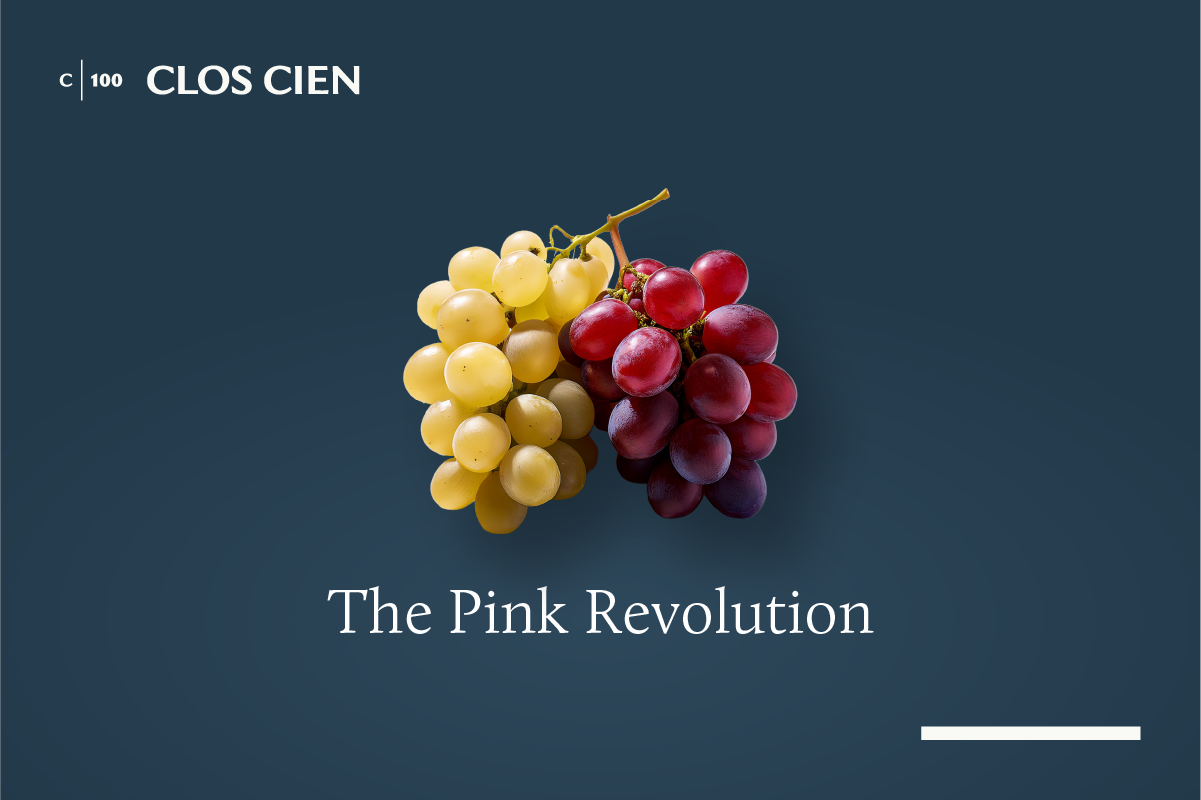
THE PINK REVOLUTION – Rosado
From clarete to modern rosé
Rioja has a long tradition of making pink wines, though the style has evolved dramatically. The original version was called clarete – a field blend of red and white grapes with one to two days of maceration. These could range from dark pink to pale red depending on the vintage and the percentage of red and white grapes used.
Under current regulations, rosado wines must contain at least 25% of red grapes (Tempranillo, Garnacha, Graciano, Mazuelo, or Maturana Tinta). They can include white varieties like Chardonnay, Sauvignon Blanc, or Verdejo, but these cannot be the predominant variety in the blend.
Modern Rioja rosados often use the sangrado (saignée) technique. This “bleeding off” of juice from red wine tanks results in deeper-colored, richer wines with pronounced strawberry and citrus notes.
There’s a growing movement toward terroir-driven rosados. Producers are increasingly sourcing grapes from specific sites rather than blending from across the region. High-altitude vineyards (500 meters and above) are particularly sought after for rosado production, as the cooler temperatures help retain freshness and acidity.
Climate change is making these higher-altitude sites more viable. The highest Rioja vineyards reach around 750-800 meters, where cooler conditions create wines with bright acidity and elegant fruit profiles.os